
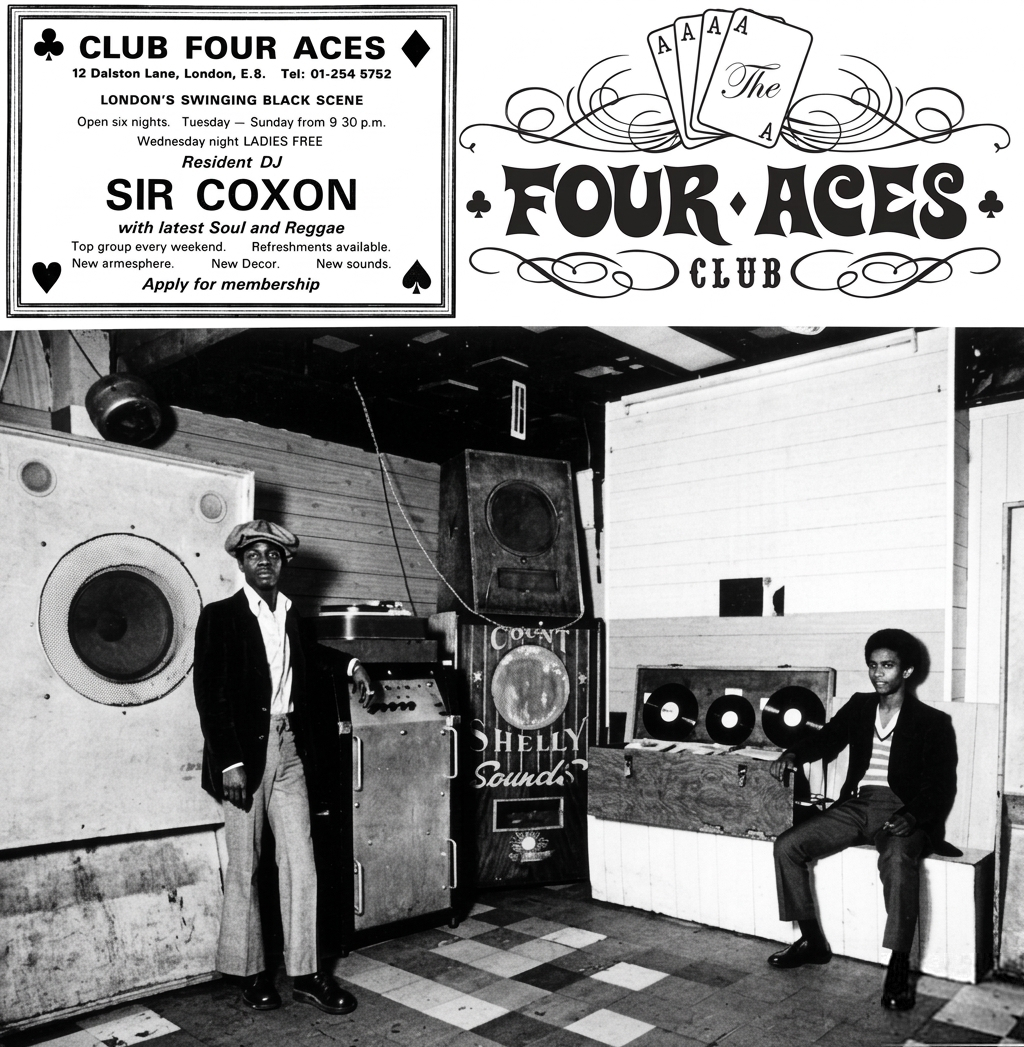
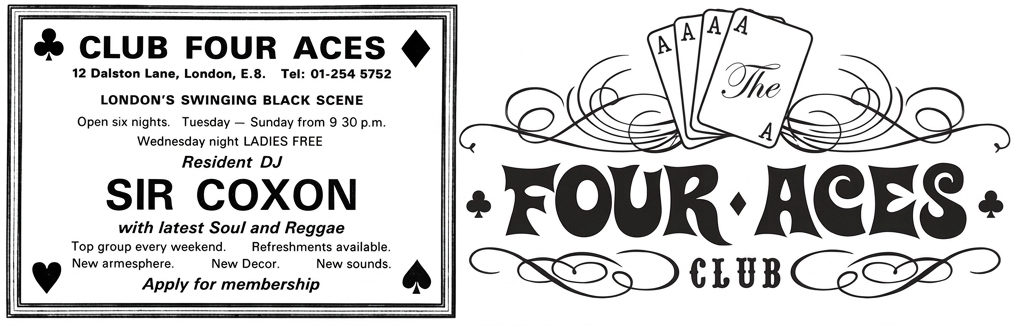
Few venues have shaped Hackney’s cultural identity as profoundly as The Four Aces Club. Opened in 1966 by Jamaican entrepreneurs and music figures Newton Dunbar and Charlie Collins, better known as Sir Collins – who also owned the adjacent Cubies club – together with Doreen Raddon, the 4 Aces became one of Britain’s most important spaces for black music, community life and nightlife culture. Across three decades it evolved from a reggae and sound system stronghold into a legendary rave venue under the name Labyrinth, helping define multiple generations of London music history.
Origins in a Changing Dalston
The Four Aces began modestly in a basement in Highbury Grove before relocating to 12 Dalston Lane, inside a vast and decaying Victorian entertainment building that had previously been a circus amphitheatre, a theatre, a cinema and in the early 60s a music establishment called first the Macador, then the Rambling Rose. The structure itself became part of the mythology: sprawling staircases, hidden rooms and cavernous dancefloors gave the venue an atmosphere unlike anywhere else in London.
At a time when black Britons had few dedicated cultural spaces, the club quickly became a social and musical centre for London’s Caribbean community. Newly arrived migrants from Jamaica and across the West Indies found in the Four Aces a place that offered familiarity, belonging and celebration during an era marked by racism, housing discrimination and exclusion from mainstream nightlife.
The Heart of Reggae London
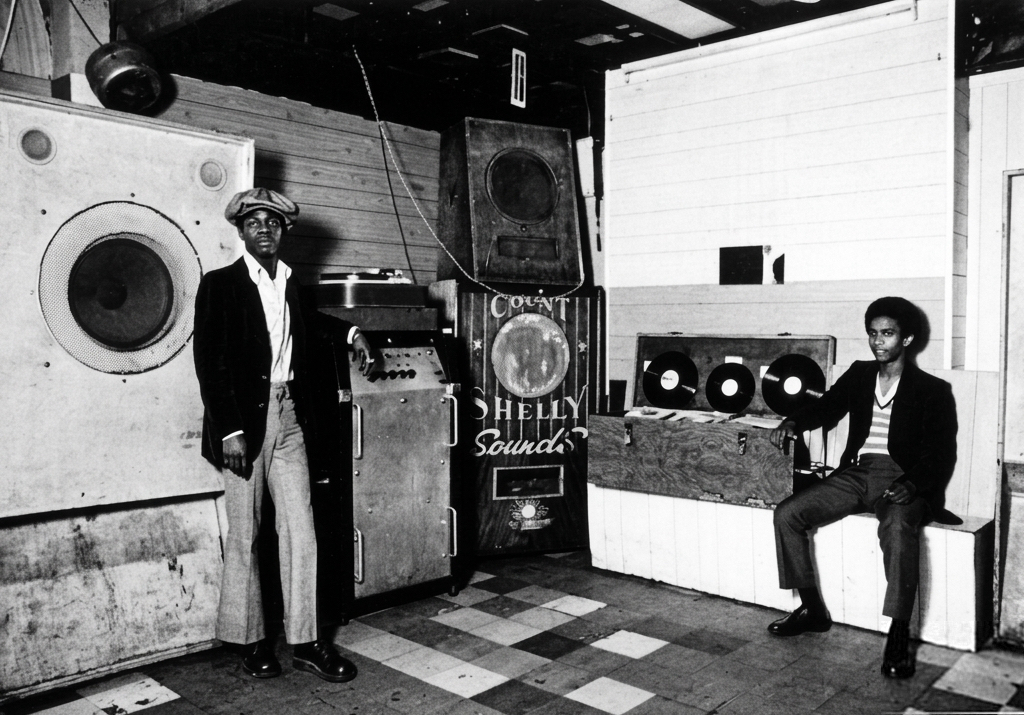
During the late 1960s and throughout the 1970s, the Four Aces established itself as one of the UK’s defining reggae venues. The club hosted live performances, sound system clashes and dances that helped introduce ska, rocksteady, dub, lovers rock and dancehall to wider British audiences.
Artists who performed at the club include Alton Ellis, Desmond Dekker, Jimmy Cliff, Ann Peebles, Percy Sledge, Ben E. King, Billy Ocean, Aswad, Black Slate and Matumbi. Its reputation for authentic and forward-thinking music also attracted influential musicians and cultural figures such as The Clash, Chrissie Hynde, Bob Marley, The Slits, Sex Pistols, Marc Bolan and Bob Dylan, many of whom were inspired by the club’s energetic atmosphere and infectious rhythms.
The club’s influence stretched far beyond entertainment. Before black radio stations became widespread in Britain, venues like the Four Aces were essential for discovering artists, sharing records and building community identity. By the 1970s, people travelled from across London and beyond to attend dances there, cementing Dalston’s reputation as a major centre of black British culture. In the 1980s resident sound system Unity transformed Friday nights at the club into legendary sessions for four years.
From Reggae to Rave: The Labyrinth Era
In the late 1980s and early 1990s, the venue transformed once again. Under promoter Joe Wieczorek, the Four Aces became home to Club Labyrinth, one of London’s most influential early rave nights. Acid house, acid techno, hardcore, jungle and drum and bass echoed through the building’s maze-like interiors, attracting a completely new generation while preserving the venue’s underground spirit.
The club became legendary within rave culture. DJs including Kenny Ken and Billy ‘Daniel’ Bunter played there regularly, while The Prodigy performed one of their first live shows at the venue. Labyrinth helped shape the sound and atmosphere of early jungle culture in London, linking black sound system traditions with the emerging rave movement.
Closure, Demolition and Legacy
Hackney Council originally acquired the site from Tesco in 1977 for £1.8 million. Around 1995 they shifted the focus towards total redevelopment, declaring the building suitable for a modern replacement. The Four Aces closed in 1997 and by 1998, despite massive public protest, all tenants were evicted to make way for a station reopening and a subsequent land sale.
Hackney Council repossessed the building using a Compulsory Purchase Order (CPO) to evict owner Newton Dunbar and rave promoter Joe Wieczorek (of Club Labyrinth) as part of wider redevelopment plans around Dalston Junction. When the railway project stalled and the sale collapsed, the Council left the buildings derelict. In a move that signaled the beginning of the end, the roof coverings were stripped shortly after the evictions, leaving the structure vulnerable to years of rain exposure that destroyed the “magnificent” interiors.
Brian A. Morton, a distinguished structural engineer, publicly challenged the Council’s leadership, labeling the situation a case of “deliberate neglect.” He noted that there were significant questions regarding why the owners permitted such a landmark to deteriorate so completely, accusing them of prioritising land value over cultural and architectural heritage. Despite campaigns to preserve the venue, the historic structure was demolished in 2007. Luxury flats and new public buildings later rose on the site, becoming symbolic for many locals of the rapid gentrification that transformed Dalston during the 2000s.
Yet the Four Aces remains deeply embedded in London cultural memory. Documentaries, exhibitions, oral history projects and campaigns for commemorative plaques have continued to celebrate its impact. More than simply a nightclub, it represented a rare autonomous cultural space where generations of Londoners created music, identity and community on their own terms. Its influence can still be heard in British reggae, jungle, grime and contemporary club culture today.
Stories from the Dancefloor
One of the most famous stories connected to the Four Aces involves Bob Marley during the early 1970s. Before he became a global superstar, Marley was still building his reputation in Britain and frequently visited London’s reggae circuit. The Four Aces was one of the few venues where Caribbean artists could perform to a large black audience that truly understood the music and sound system culture behind it. According to several accounts from musicians and promoters of the era, Marley would sometimes remain in the club long after performances had finished, listening to selectors, reasoning with locals and absorbing the atmosphere that later helped shape reggae’s British identity.
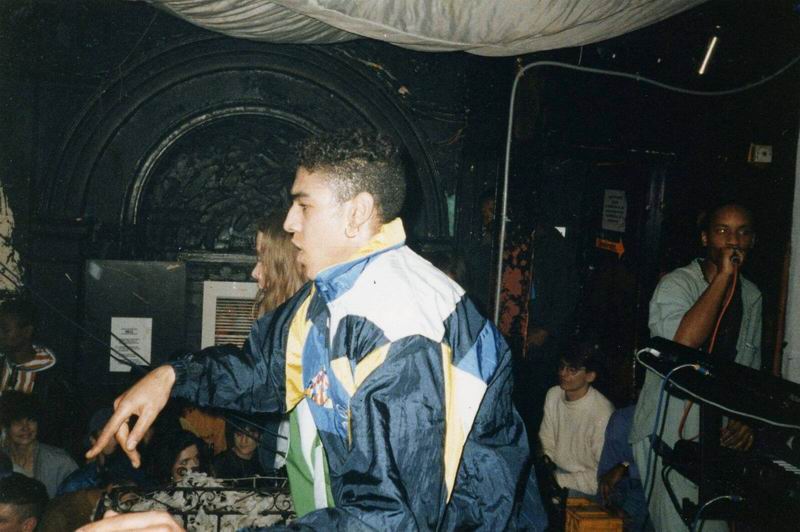
Another legendary anecdote comes from the rave years. The Prodigy performed one of their earliest London appearances at Labyrinth inside the Four Aces building in the early 1990s, before becoming internationally famous. At the time they were still emerging from the underground hardcore scene, and the crowd reportedly had little idea they were watching a future global act. The raw intensity of those nights became part of rave folklore, especially because the venue’s crumbling Victorian interiors, sweat-filled corridors and massive bass bins created an atmosphere unlike conventional clubs.
There are also long-standing stories about surprise appearances and clashes involving major Jamaican sound systems. Selectors from Saxon Studio International, Jah Shaka and Sir Coxsone would sometimes play until sunrise, with crowds packed shoulder to shoulder inside the building. These weren’t polished commercial events, they were marathon sessions where dubplates, exclusive recordings and MC battles could elevate a selector’s reputation overnight. For many artists, gaining respect at the Four Aces mattered more than mainstream press coverage because the audience was knowledgeable, demanding and deeply rooted in sound system culture.
Leave a Reply