For three decades, the Clapton Rink Cinema stood as one of Hackney’s largest and most ambitious entertainment venues, drawing thousands of local residents through its doors during the golden age of silent film and the arrival of sound cinema.
Although little remains of it today, its story reflects both the rapid growth of popular entertainment in early 20th-century London and the devastating impact of the Second World War on the East End.
From Skating Craze to Cinema Palace
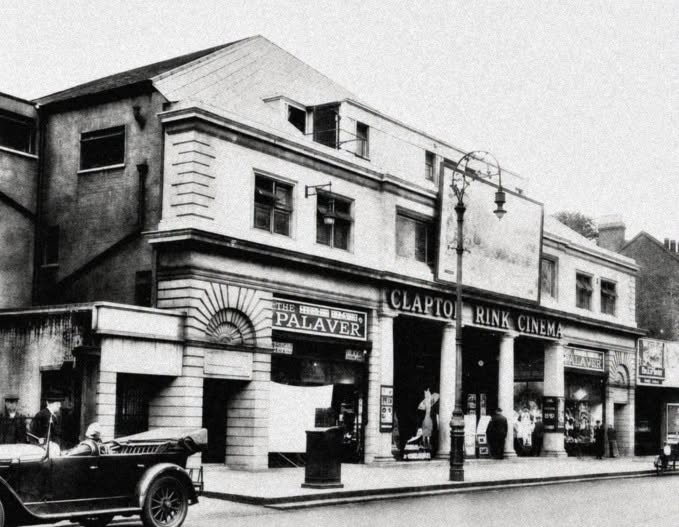
The building’s origins lay not in cinema but in sport. It opened on the 11th of December 1909 as the ‘Clapton Premier Skating Rink’ opposite Linscott Road on Lower Clapton. The project was launched during the final stages of Britain’s roller-skating boom, a craze that had swept London and other major cities in the years immediately before the First World War.
Unfortunately for its owners, the enthusiasm for roller skating was already beginning to fade by the time the rink opened so attempts were made to diversify the venue’s use. It briefly operated as a dance hall and was also adapted for ice skating, but neither venture proved financially successful.
The vast building, however, possessed exactly the sort of large, uninterrupted interior space that was becoming attractive to cinema entrepreneurs. As motion pictures rapidly grew in popularity, the struggling rink offered an ideal opportunity for conversion into a major picture house.
The Birth of the Clapton Rink Cinema
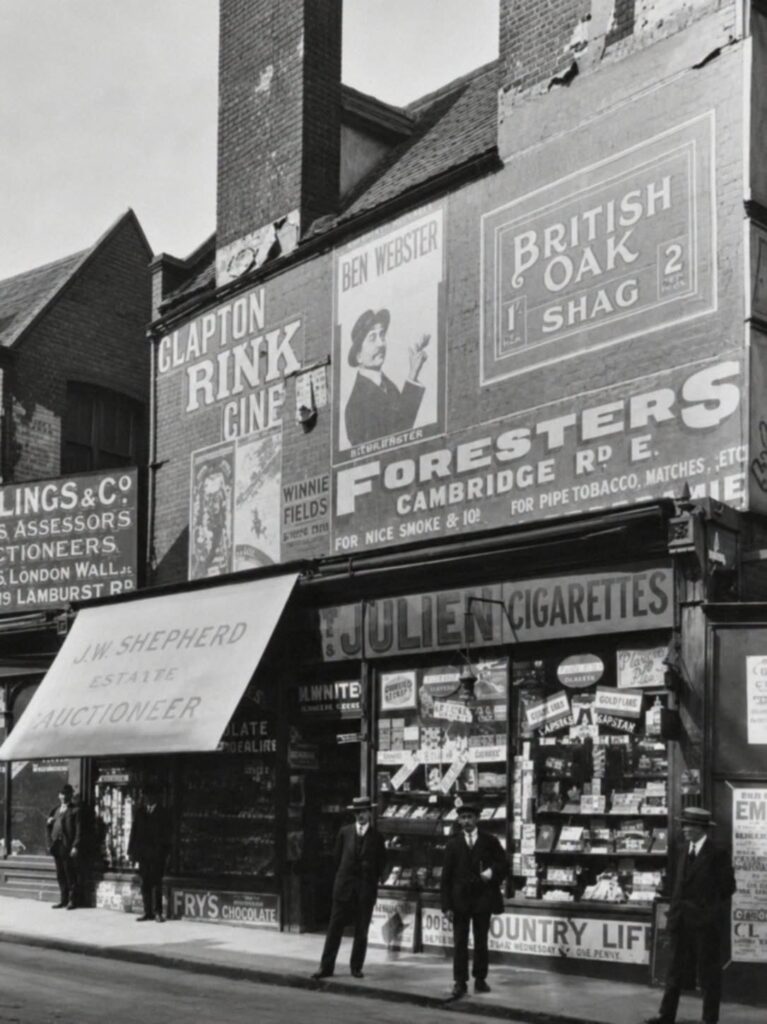
The building was acquired by Metropolitan Theatres Ltd, which commissioned architect Edward A. Stone to transform the former skating rink into a cinema. The new ‘Clapton Rink Cinema’ opened on the 9th of July 1911 with seating for approximately 2,000 people, making it one of the largest cinemas in Hackney and among the biggest neighbourhood cinemas in London at the time.
Like many cinemas of the silent era, the Clapton Rink offered much more than film screenings alone. Programmes typically combined motion pictures with live entertainment, including singers, musicians, comedians and variety acts.
Before recorded soundtracks became standard, films were accompanied by a live orchestra or piano music, creating a far richer experience than modern audiences often imagine when thinking of silent cinema.
Hackney’s Entertainment Boom and the Arrival of Sound
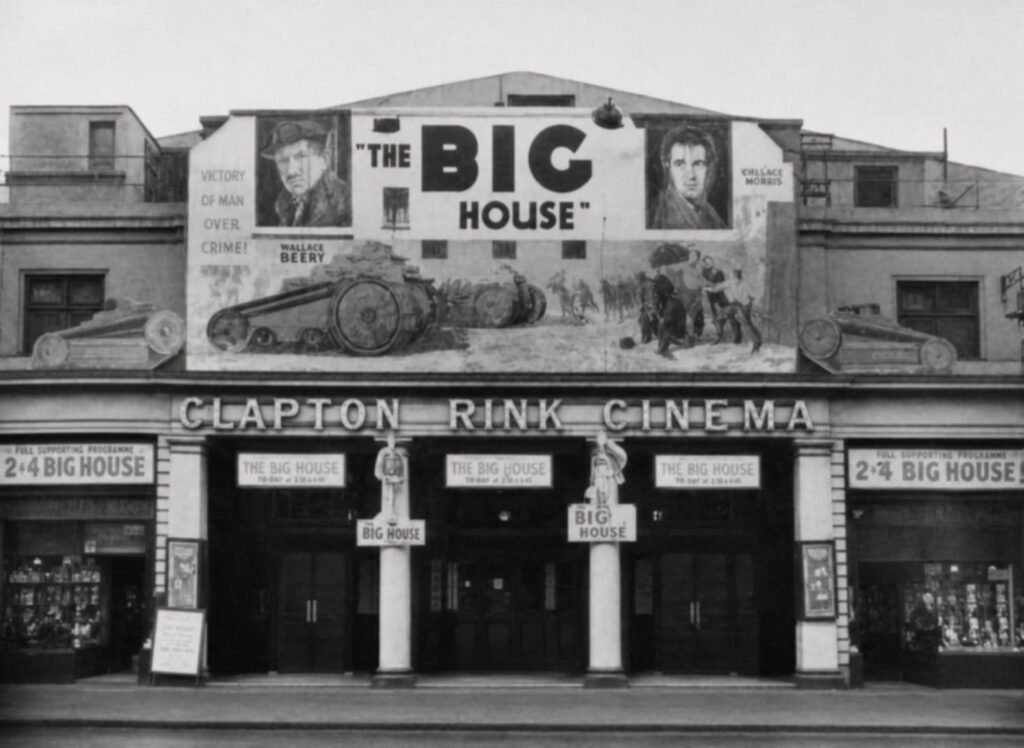
The Clapton Rink emerged during a period when Hackney was becoming one of London’s major centres of popular entertainment. The years between 1905 and 1915 saw numerous cinemas, theatres and music halls open across the borough and large venues such as the Clapton Rink reflected increasing demand for affordable leisure activities among working-class and lower-middle-class Londoners.
The cinema changed ownership several times during the 1910s and 1920s as the British film industry consolidated into larger chains. Despite competition from newer venues, the Clapton Rink remained an important local cinema. Its enormous capacity allowed it to accommodate audiences on a scale that smaller neighbourhood picture houses could not match, helping it retain a significant place in Hackney’s entertainment circuit.
A major turning point came in April 1928 when the cinema was acquired by the Gaumont British Theatres group, one of the most influential cinema operators in the country. This period coincided with one of the most dramatic technological revolutions in entertainment history: the arrival of synchronised sound films, or ‘talkies’.
Across Britain many older cinemas struggled to afford the expensive conversion to sound, but the investment ensured that the Clapton Rink remained viable during the transition. To remain competitive, the Clapton Rink was equipped with an RCA sound system, allowing audiences to experience the latest talking pictures. For local residents, hearing actors speak and sing on screen for the first time would have been every bit as revolutionary as the arrival of television decades later.
War, Bombing and Demolition
Like much of East London, Lower Clapton suffered heavily during the Second World War. The area was repeatedly targeted during German bombing raids because of its proximity to key transport routes, industrial sites and the docks further south.
Although the cinema survived the worst years of the Blitz, its luck eventually ran out. In August or September 1942, the Clapton Rink Cinema received a direct hit from German bombs. The damage was so severe that the building could not be repaired.
The once-grand cinema was forced to close permanently and remained a bomb-damaged shell for several years after the war. It was finally demolished in 1950, bringing an end to a building that had served Hackney’s entertainment needs for over thirty years.
Petrol Pumps and Continental Groceries
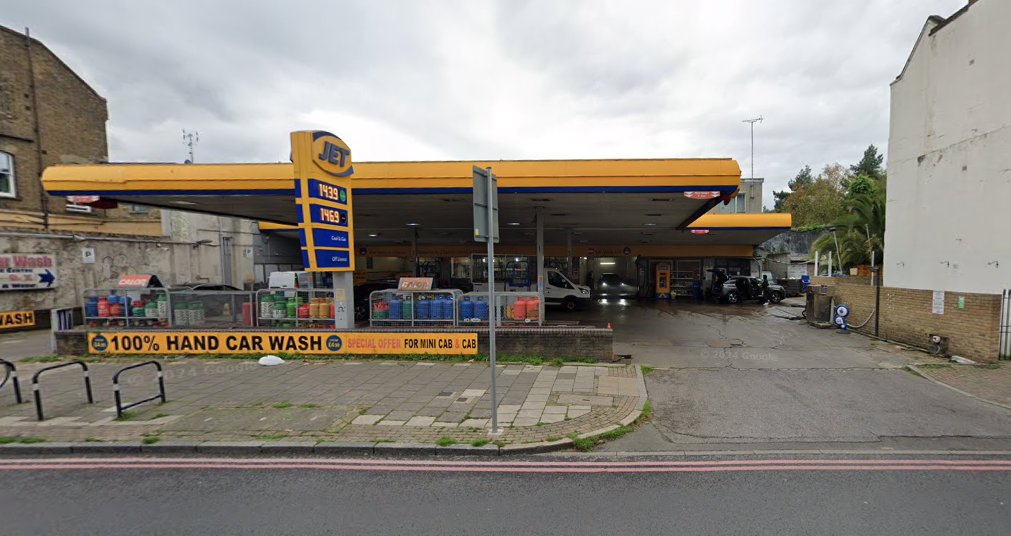
A petrol station was later set up on the site, erasing almost all visible traces of the cinema. Few passing motorists filling up at the Clapton Service Station would have imagined that the site had once accommodated such an enormous cinema.
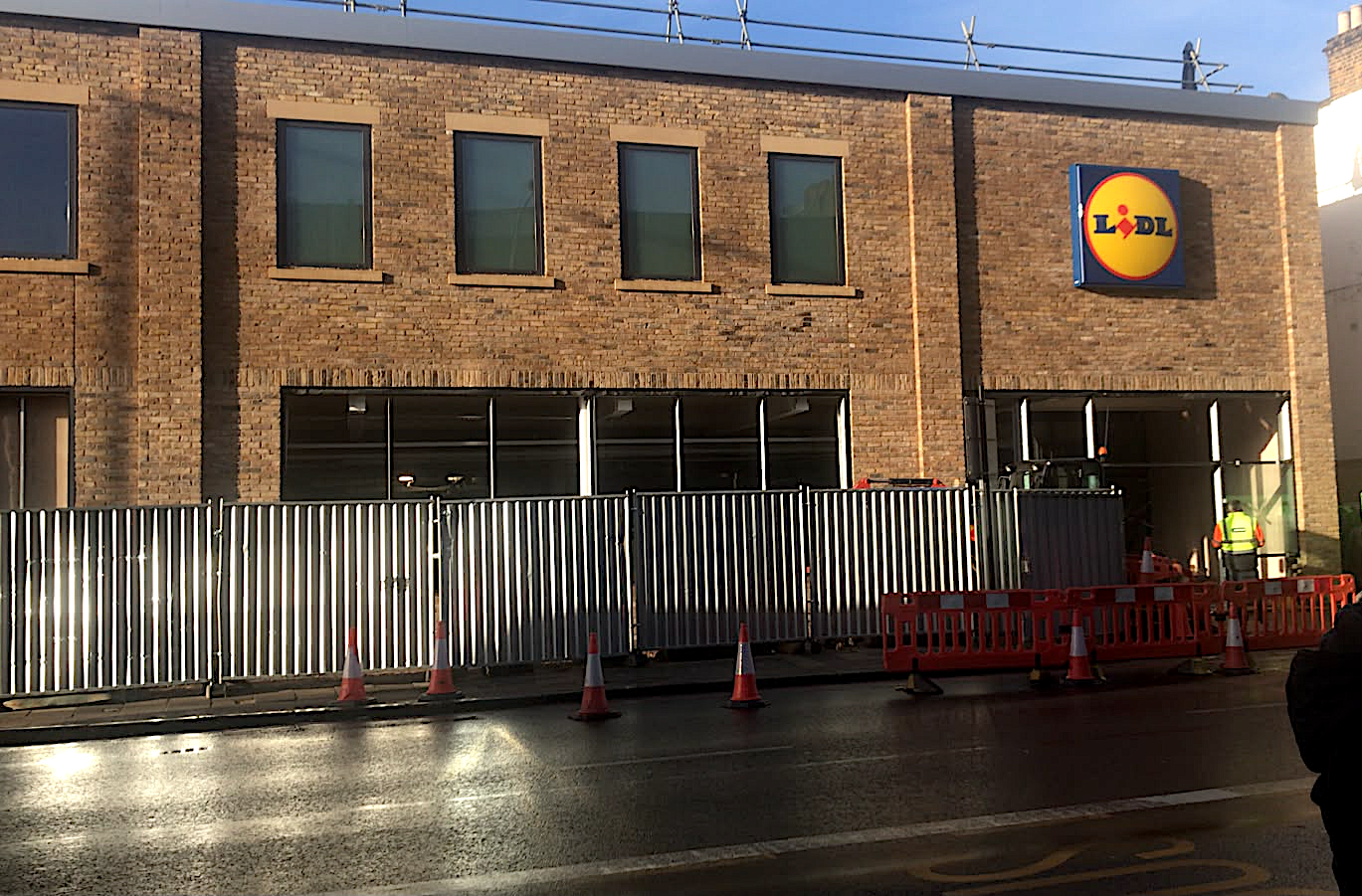
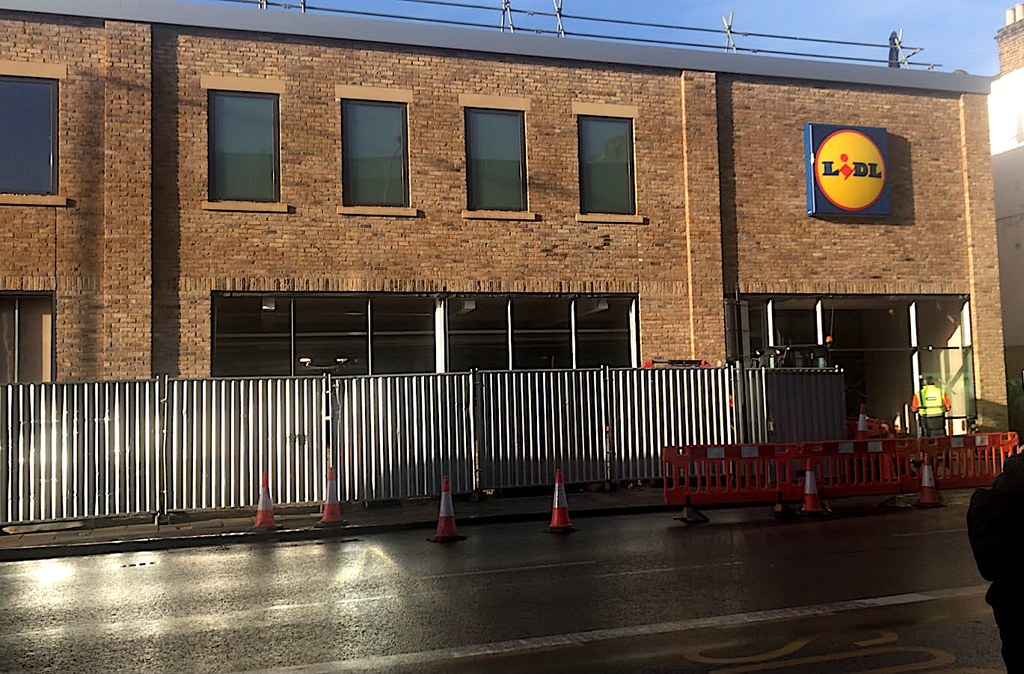
The latest chapter in the history of 137-141 Lower Clapton road involves another complete reinvention, with the sire being redeveloped as a Lidl supermarket.
Hackney Council granted planning permission for the demolition of the petrol station structures and construction of a two-storey supermarket in April 2025. The scheme has continued through the planning process in 2026, with further applications covering construction arrangements, drainage, building materials, lighting and transport. More recent proposals have raised questions about delivery hours and accessible parking provision.
The new Lidl in Lower Clapton is expected to open in early 2027, although no official opening date has been announced.


Leave a Reply