
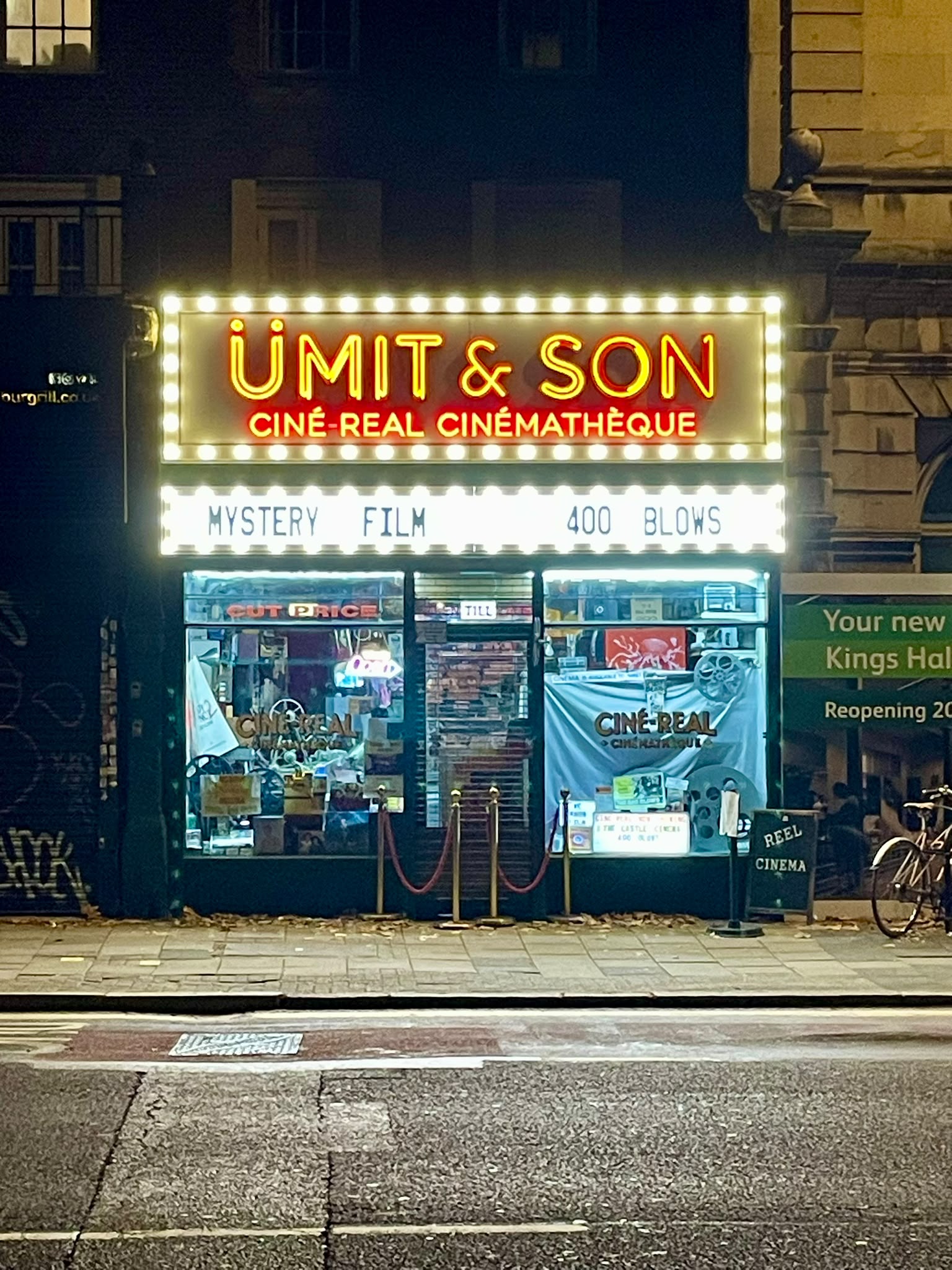
In the heart of Hackney, Ümit Mesut stands as a defiant guardian of the physical film reel, operating from a shop that feels entirely removed from the digital age. Having started his career as a ‘rewind boy’ at the Rio Cinema in Dalston, the Cyprus-born projectionist has spent over 40 years building a cinematic Aladdin’s cave on Lower Clapton Road, and now a new documentary, a successful crowdfunding campaign and an ambitious Cinémathèque are helping to secure its future.
His story, immortalised in the short documentary The Way of the Dodo and the forthcoming feature The Last Picture Shop, is one of pure, analogue passion. In a world of cold pixels and streaming algorithms, Ümit offers a tactile connection to cinema history, famously operating without a computer.
The Cinematic Emporium of Ümit & Son
Stepping into Ümit & Son is like entering a living time capsule where every square inch is occupied by film history. The shop began its life as a grocery store in 1985, but Ümit’s obsession with celluloid quickly saw the fruit and vegetables replaced by thousands of 16mm, 8mm and Super 8 reels.
Today, the shelves groan under the weight of vintage projectors, rare VHS tapes and classic movie posters, creating a sensory experience that no digital platform could ever replicate. It is a place where analogue technology is not merely sold but actively preserved and revered by a man who views every reel as a precious artefact.
One of the most enchanting features of the premises is the ‘pocket cinema’ hidden at the back of the shop. This intimate, 15-seat micro-cinema allows visitors to experience films projected using original vintage equipment. The space has also hosted private screenings, offering audiences a rare opportunity to enjoy cinema in its traditional, mechanical form.
This tiny venue provides a communal, nostalgic atmosphere that has made the shop a pilgrimage site for film purists, offering the warm glow of light passing through celluloid that digital projection cannot quite replicate.
The Legacy of Ciné-Real
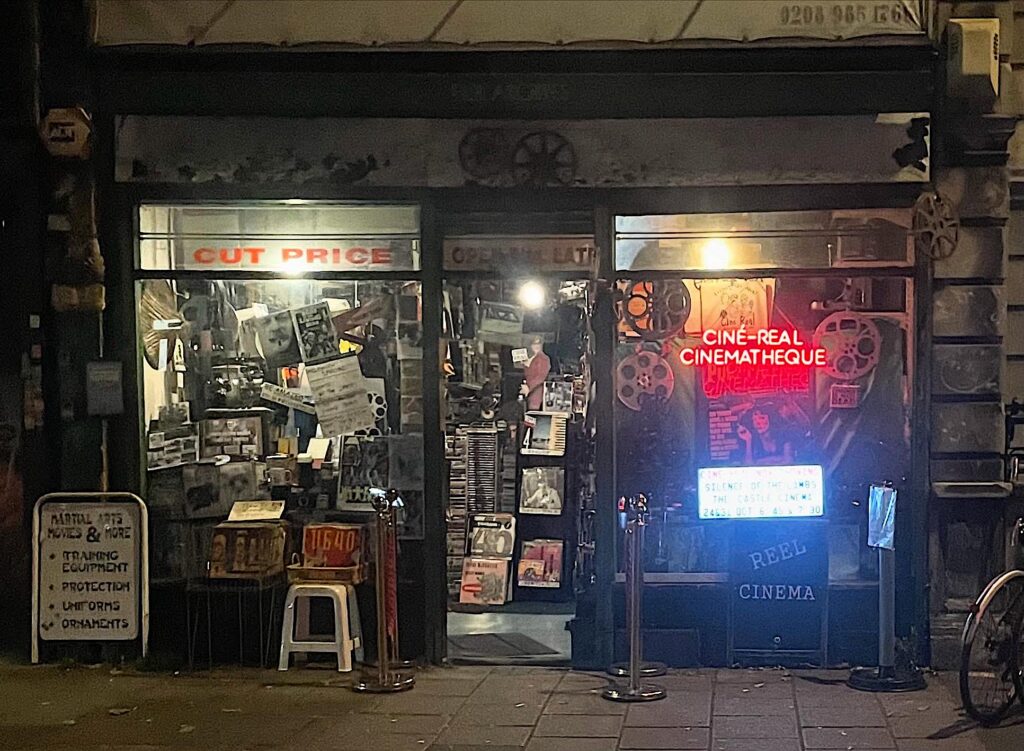
The collaboration between Ümit and director Liam Saint-Pierre began in 2011, when Liam brought a Super 8 projector he had rescued from a Hackney bin into the shop. Their shared enthusiasm for analogue cinema eventually led to the founding of Ciné-Real, a film club dedicated to screening feature films on 16mm film stock rather than digital formats.
Their first screening of Jaws was reportedly beset by technical problems, prompting Liam to enlist Ümit’s considerable expertise. What began as an unlikely partnership developed into a project devoted to keeping traditional film projection alive.
While the club’s roots are firmly planted in the back room of the Clapton shop, it has expanded to a regular residency at The Castle Cinema on Brooksby’s Walk. This partnership has allowed classic masterpieces such as Jaws, Chinatown and Psycho to reach new audiences in their original, textured glory.
Ciné-Real serves as both a showcase for Ümit’s incredible archive and a valuable educational experience for a generation raised on high-definition files. By highlighting the grain, the occasional scratch and the physical presence of the film strip, the club transforms a movie night into something far removed from the usual multiplex experience.
The Last Picture Shop: From Hackney to Hollywood
Ümit’s remarkable story first reached a wider audience through Liam Saint-Pierre’s short documentary The Way of the Dodo, which explored his determination to preserve traditional film technology in an increasingly digital industry.
Now their friendship is the subject of a feature-length documentary, The Last Picture Shop, following the pair on an unlikely adventure from Lower Clapton Road to Hollywood. Their mission is to track down Quentin Tarantino, one of cinema’s most outspoken defenders of celluloid, and persuade him to help save Ümit’s threatened shop.
Behind this extraordinary quest lies a more serious story about rising costs, commercial pressures and the disappearance of independent cultural spaces. Ümit’s business is not simply a shop selling obsolete equipment, but a working archive containing decades of specialist knowledge and machinery that is becoming increasingly difficult to maintain.
The 104-minute documentary was selected for the 2026 BFI London Film Festival’s Works-in-Progress Showcase. As of November 2026, it remains in post-production, with 2027 listed as its project year, although a public release date has yet to be confirmed.
A Crowdfunding Success and a New Cinémathèque
The campaign to support The Last Picture Shop and preserve Ümit’s cinematic legacy has attracted considerable public enthusiasm. Its Kickstarter appeal raised £56,162 from 779 backers, exceeding its £30,000 target and demonstrating the affection surrounding this extraordinary Hackney institution.
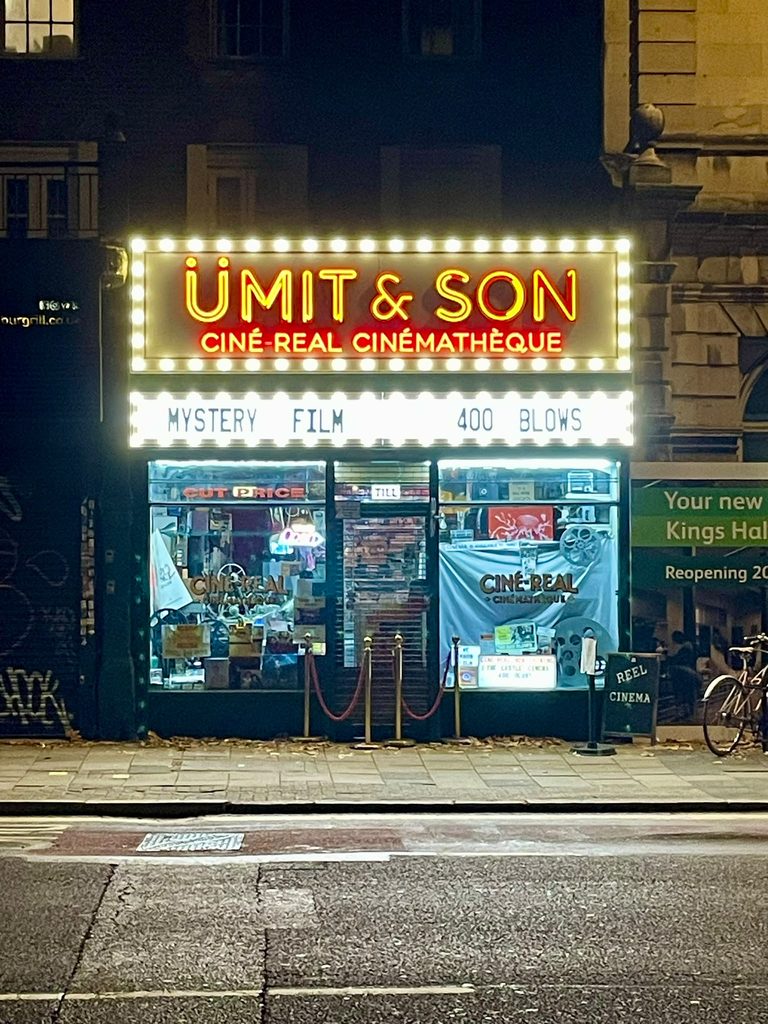
The support has helped advance the documentary and the development of an ambitious new project: the Ciné-Real Cinémathèque, which has now opened at 35 Lower Clapton Road.
More than a screening room, the Cinémathèque combines a working cinema, film archive and educational space dedicated to the practical skills of analogue filmmaking. Visitors can learn to handle and operate 16mm and 35mm projectors, explore traditional editing techniques and work with equipment such as Steenbeck flatbeds and Moviolas, once essential tools in professional film production.
The new venue is also introducing weekly public screenings, including mystery films selected from the archive. Advertised dates include 20 and 27 November and 4 and 11 December 2026, with tickets priced at £19.50.
For those interested in learning the craft, Ümit and Liam are also holding a practical projection workshop on Wednesday 25 November, from 7pm to 9.30pm, covering the handling, loading and threading of traditional film projectors.
Keeping the Reels Turning
Despite the success of the fundraising campaign and the opening of the Cinémathèque, Ümit & Son continues to face the financial pressures that have threatened so many independent cultural businesses across London.
What makes Ümit’s collection particularly valuable is not simply the thousands of reels and vintage machines, but his ability to keep them working. As experienced projectionists retire and replacement parts become increasingly scarce, practical knowledge of this kind risks disappearing alongside the equipment itself.
Today the familiar cluttered shopfront on Lower Clapton Road continues to conceal one of Hackney’s most unusual cultural treasures. And while the rest of the world streams, scrolls and upgrades, Ümit Mesut is still threading film through projectors, keeping the reels turning and proving that some things are simply too precious to leave behind.
Leave a Reply