
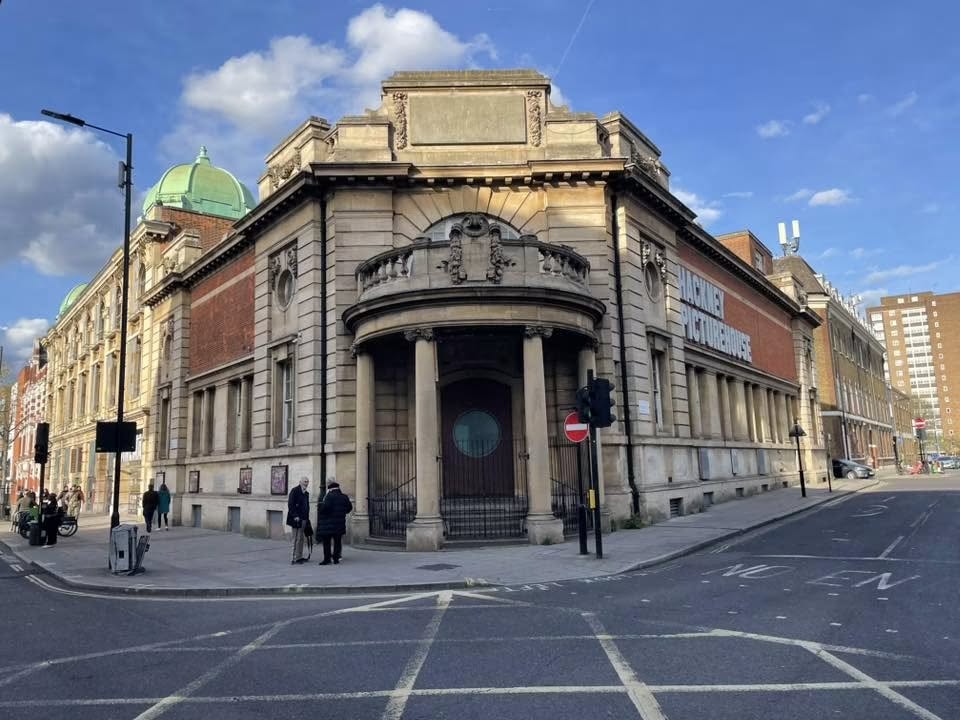
Jermain Jackman, the Hackney-born singer who won The Voice UK in 2014, has helped rescue Rising Tide, the music charity based in the former Hackney Central Library on Mare Street that nurtured his talent as a youngster. He is now seeking to raise £500,000 to transform its premises into a creative hub for future generations.
Jackman’s ambitious plans mark the latest chapter in the history of this Edwardian building, which has evolved from a Carnegie-funded public library into a multimillion-pound music venue, a cinema and a training ground for some of Britain’s most successful musicians.
Although Rising Tide shares the historic complex with Hackney Picturehouse, the proposed £500,000 redevelopment only concerns the charity’s own premises rather than the cinema. How the proposed new Mare Street entrance and additional creative facilities will be accommodated within the existing building remains to be clarified once detailed architectural plans become publicly available.
The Birth of Hackney’s First Central Library
The story of Hackney Central Library began in 1878 with an unsuccessful campaign to establish a free public library in the borough. The plan finally gained momentum in 1903, when the Metropolitan Borough of Hackney adopted the Public Libraries Act and acquired a plot of land on Mare Street from the London County Council, paving the way for the construction of the new library.
The project received a £12,000 grant from Scottish-American industrialist Andrew Carnegie, whose enormous fortune helped finance the establishment of more than 2,500 libraries around the world. Carnegie believed that access to books and education could provide ordinary people with opportunities for self-improvement, although local authorities receiving his grants were expected to provide sites and undertake the ongoing running costs.
Following an architectural competition, Henry A. Crouch was appointed to design the new library. Built during the Edwardian period, its imposing stone frontage reflected the growing importance attached to public education and municipal buildings at the beginning of the 20th century.
A Royal Opening on Mare Street
On the 23rd of March 1907 the foundation stone was laid by HRH Princess Christian, otherwise known as Princess Helena, the third daughter of Queen Victoria. The ceremony took place during the mayoralty of Alderman Dr Frederick Montague Miller, whose name appears alongside hers on the inscription.
The library was officially opened on the 28th of May 1908 by the Prince and Princess of Wales, the future King George V and Queen Mary. Its exterior was constructed using Ancaster stone, a limestone quarried in Lincolnshire and widely employed in prestigious British buildings.
One detail that often causes confusion is that the former library and the adjoining Methodist Central Hall are two distinct buildings. The latter opened in 1925, some 17 years after the library. Although their interiors were subsequently incorporated into the same entertainment complex and their façades now share commercial branding, they originally served very different purposes. The library’s foundation stone remains visible today.
Nine Decades of Public Education
For approximately 90 years the building served as the centre of Hackney’s public library network, witnessing two world wars, enormous demographic changes and successive transformations of the surrounding neighbourhood.
By the late 1990s plans were underway to relocate the library and give its historic premises a completely different function. In 1999 a new Hackney Central Library opened opposite the original building in Town Hall Square, bringing the old building’s long association with public lending services to an end.
The relocation created an opportunity to combine the former library and neighbouring Methodist premises into an ambitious cultural complex. Music, rather than literature, would become the focus of the next major investment on Mare Street.
The Ocean: Hackney’s £23 Million Musical Gamble
Following an extensive redevelopment around 2000, the Ocean officially launched in 2001. With approximately £23 million invested in the project, the venue was intended to establish Hackney as a major destination on London’s live-music circuit while providing opportunities for local musicians, community organisations and young people.
The project incorporated three performance spaces, sophisticated acoustics, recording facilities and professional audiovisual equipment. Among its more unusual architectural features were ten windows capable of displaying projected video imagery, allowing promotional footage to become part of the building’s exterior.
Ocean’s opening celebrations featured the reunion of Marc Almond and Dave Ball as Soft Cell, marking their first live performances together in 17 years. It was an extraordinary opening statement for a venue situated opposite Hackney Town Hall rather than in the established entertainment districts of central London.
From James Brown to Lee ‘Scratch’ Perry

Among the artists associated with Ocean’s concert history were James Brown, Patti Smith, George Clinton & Parliament-Funkadelic, Lee ‘Scratch’ Perry, The Damned, Stiff Little Fingers, Fun Lovin’ Criminals, Soft Cell, Jeff Mills, Orbital, The Abyssinians, Luciano, Iration Steppas, Asian Dub Foundation, Westlife and Level 42.
For Hackney’s African and Caribbean communities, Ocean’s significance went beyond the occasional appearance of an international superstar. It provided a substantial professional platform for musical traditions that had developed locally through sound systems, record shops, independent labels, community centres and blues parties over several generations.
Rising Tide: Opening Doors to the Music Industry
Alongside the Ocean’s commercial programme, a more socially ambitious initiative was taking shape behind the scenes. Established in 2001 by Gabin Sinclair, Rising Tide was designed to give young people access to professional music production, performance facilities and industry training, regardless of their financial circumstances or educational backgrounds.
The organisation worked with young people experiencing social exclusion, young offenders and students with learning difficulties. Its location within a functioning entertainment complex offered something that conventional classrooms could not: direct exposure to the equipment, working practices and creative environment of the music industry.
Rising Tide Trust was incorporated on the 11th of June 2001 and became a registered charity on the 10th of April 2006. Among the young musicians who passed through its doors were Labrinth, Little Simz and Jermain Jackman, all of whom would subsequently achieve national or international recognition.
Controversy, Policing and the Cancellation of Beenie Man
Despite its cultural achievements, the Ocean attracted increasingly negative publicity during its final years. Among the most widely reported incidents was a disturbance in 2004 following an event for under-18s, during which up to 150 young people reportedly became involved in confrontations with police involving bricks and bottles.
Another controversy erupted in June 2004, when Jamaican dancehall star Beenie Man was scheduled to perform at the venue. Gay rights organisation OutRage! challenged the booking over lyrics advocating violence against gay people, prompting police to speak to the singer upon his arrival at Heathrow Airport.
Ocean cancelled the concert scheduled for the 24th of June, citing safety concerns. Although the Metropolitan Police had communicated the campaigners’ objections to the management, officers maintained that they had not instructed the venue to cancel the performance.
The episode placed Ocean at the centre of an international debate about homophobia, freedom of expression and dancehall culture. The management reaffirmed its commitment to Jamaican music, although a spokesperson indicated that Beenie Man was unlikely to be invited back.
The Collapse of a £23 Million Cultural Project
By late 2004 the Ocean’s financial difficulties had become insurmountable. Hackney Council withdrew its subsidy after concluding that the organisation had failed to establish a financially sustainable business model, and administrators PricewaterhouseCoopers were brought in.
The rapid failure of such an expensive cultural development attracted considerable criticism. Facilities intended to establish Hackney as a major musical destination had become an enormous financial burden, prompting critics to describe Ocean as a white elephant.
The consequences extended well beyond the cancellation of concerts. According to contemporary reporting in The Guardian in December 2004, Rising Tide faced the prospect of losing its educational facilities and equipment. Gabin Sinclair reported difficulties retrieving computers containing students’ work, with 300 enrolments already secured for courses due to begin the following January.
The then mayor of Hackney, Jules Pipe, wanted an experienced music venue operator to take over the complex. The council also expressed its intention to continue supporting Rising Tide although its continued occupation of the premises was not guaranteed at that point.
From Ocean to Hackney Picturehouse
In 2006 Hackney Council acquired a 25-year lease on the former library and Methodist hall complex. Several years later, a new proposal emerged to convert the struggling entertainment venue into a cinema operated by Picturehouse Cinemas.
The council’s consultation involved more than 400 residents and 50 local businesses. According to councillor Jonathan McShane, there was strong support for establishing a cinema at the site. The arrangement was also expected to save the council approximately £3 million in running costs over five years.
Hackney Picturehouse opened in 2011, introducing a programme of mainstream, independent and international films alongside special screenings, discussions and cultural events. Architects Panter Hudspith adapted the existing structure, retaining its historic external appearance while creating contemporary cinema spaces.
The conversion was also widely discussed in the context of Hackney’s accelerating gentrification, particularly in the years leading up to the 2012 London Olympics. Supporters welcomed the return of cinema to Hackney Central and the reuse of a struggling cultural facility, while critics of the wider regeneration process questioned whether the changing character of the neighbourhood was increasingly catering to wealthier newcomers.
The Night Drake Came to Mare Street
On the evening of the 4th of September 2019, Hackney Picturehouse attracted international attention when Canadian rapper Drake arrived for the UK premiere of the revived crime drama Top Boy.
Drake had discovered the original series online and subsequently became instrumental in bringing it back to television after Channel 4 discontinued it following its second series in 2013. Returning as a Netflix production, the drama featured Drake as an executive producer.
The Mare Street premiere brought together Ashley Walters, Micheal Ward, Little Simz and several other members of the cast. There was a particularly fitting connection in Little Simz’s appearance: years before returning to the building as an internationally recognised musician and actress, she had benefited from Rising Tide‘s creative opportunities.
The revived series premiered on Netflix on the 13th of September 2019, reaching an international audience with a drama deeply rooted in the social and cultural identity of East London.
Gone But Not Forgotten: Preserving Hackney’s Musical Heritage
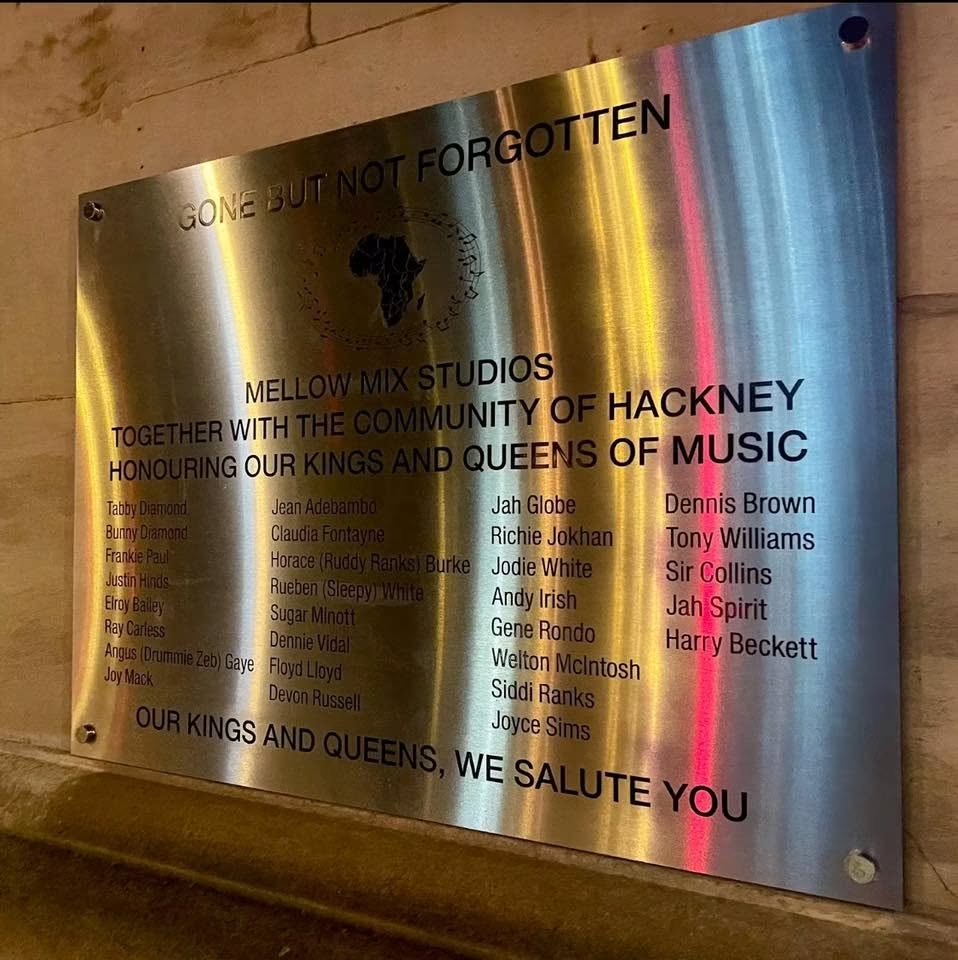
On the 12th of November 2022, the former Ocean venue became the setting for a tribute to its musical past. A commemorative plaque honouring 24 late black musicians was installed as part of the Gone But Not Forgotten initiative led by Mellow Mix Studios, one of Hackney’s long-standing black music organisations.
Funded by the local community, the memorial recognised artists whose performances and relationships with the borough had contributed to its rich musical identity, particularly through reggae.
The 24 musicians commemorated are Tabby Diamond, Claudia Fontayne, Jodie White, Bunny Diamond, Horace (Ruddy Ranks) Burke, Andy Irish, Frankie Paul, Reuben (Sleepy) White, Gene Rondo, Justin Hinds, Sugar Minott, Welton McIntosh, Elroy Bailey, Denni Vidal, Siddi Ranks, Ray Carless, Floyd Lloyd, Joyce Sims, Angus (Drummie Zeb) Gaye, Devon Russell, Joy Mack, Jah Globe, Jean Adebambo and Richie Johkan.
For the organisers, the memorial was also about ensuring that black British musical history was documented by the communities and individuals who had helped shape it. Positioned on a building whose function and surroundings had changed considerably, the plaque preserves a permanent reminder of an important period in Hackney’s cultural history.
Jermain Jackman: From Rising Tide to National Stardom

Born in Homerton Hospital in 1995, Jermain Jackman grew up in Hoxton and Finsbury Park. The youngest of five children, in a family that included two sets of twins, he discovered his singing talent through the church. At seven, his performance of Amazing Grace in front of a congregation gave him his first taste of public recognition.
Jackman first visited Rising Tide at the age of 11, gaining access to an environment in which he could develop his musical abilities. His subsequent journey towards a professional career, however, was not without setbacks. In an interview with Love Hackney he recalled an early experience auditioning for The Voice, during which interviewers asked questions that he felt reinforced negative stereotypes about young black men growing up in London.
After being rejected, his confidence suffered so considerably that he stopped singing for two years. A chance encounter with MOBO Awards founder Kanya King at a family friend’s birthday party encouraged him to audition again. In April 2014, aged 19 and mentored by will.i.am, Jackman won the third series of The Voice UK.
Returning to Rising Tide: A Charity in Financial Distress
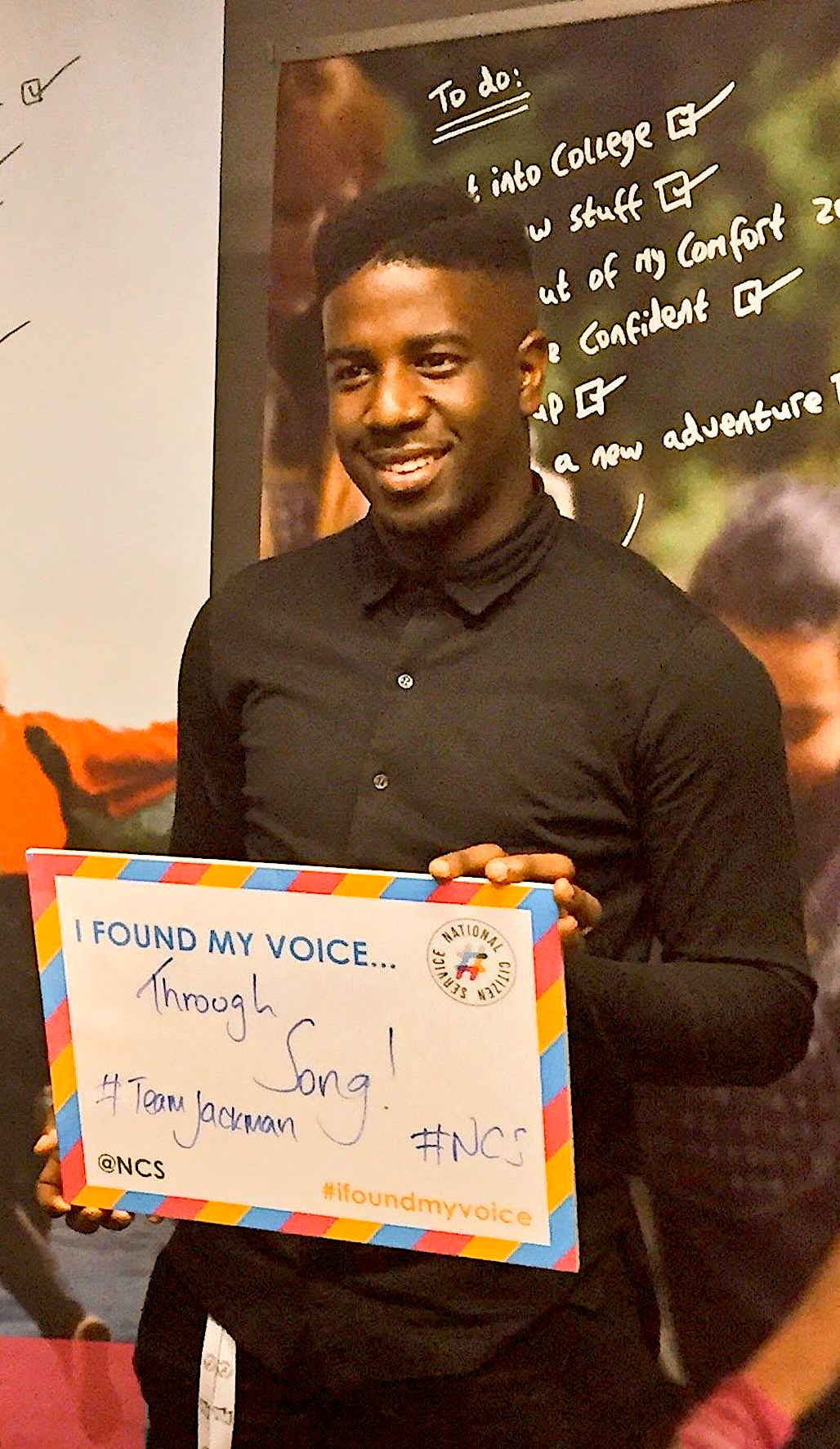
In 2024 Jackman returned to the organisation that had supported his musical development, this time as its chief executive. What began as an opportunity to give something back to his community soon became a far more demanding undertaking.
Speaking to Hackney Post, Jackman described serious financial and staffing problems within the charity. According to his account, rent had remained unpaid since 2017 and there was a possibility that the premises could be assigned a different use.
The Charity Commission’s financial records provide an interesting insight into the organisation’s circumstances during the years preceding its recent recovery.
October 2026: Turning the Tide on Historical Debt
On the 24th of October 2026 the Hackney Society organised a guided exploration of the old Central Library, examining its architectural and cultural history before concluding with a discussion with Jackman about Rising Tide‘s future.
It was during this event that Jackman announced that the charity’s historical debt problems had been resolved, with his own financial resources helping to make that possible.
Neither the amount personally contributed by Jackman nor the total value of the historical debt was specified in the published report. Nevertheless, the announcement represents an important milestone for an organisation whose continued presence on Mare Street had been threatened by its financial circumstances.
A £500,000 Creative Hub for Mare Street
Jackman’s next objective is considerably more ambitious than simply restoring the charity’s financial stability. He is seeking £500,000 to redevelop Rising Tide‘s premises into a multidisciplinary centre capable of accommodating different stages of artistic and musical production within the same building.
Among the proposed improvements are a dedicated dance studio, facilities for live performances and a new entrance directly onto Mare Street. At present, visitors reach Rising Tide through an entrance on Valette Street, behind the former library. Creating a more prominent street-facing entrance would give the organisation a much stronger public presence.
Initial architectural designs are being developed with local practice RCYYC, co-founded by architect Yaya Chen. Rising Tide is approaching charitable foundations and trusts in an effort to secure the necessary financial backing.
The £500,000 remains a fundraising target rather than confirmed investment. As of November 2026 the project is in its preliminary design and fundraising phase, with no confirmed construction timetable or opening date.
Keeping Creativity Accessible in a Changing Hackney
One of the most significant aspects of Rising Tide‘s revival is its open-door approach. Young people can access its facilities without paying for studio time, with staff available to help them develop their ideas and explore potential careers.
The charity’s existing resources include professional recording equipment, rehearsal rooms, podcast facilities, workshops and mentoring. Its programme also introduces participants to industry professionals, offering opportunities to develop practical knowledge, build relationships and understand how the creative industries operate.
Weekday afternoons reportedly attract around 50 visitors, which highlights the demand for accessible spaces where young people can socialise, experiment and create outside the more formal environments of schools and colleges.
In a borough where rising commercial rents and redevelopment have placed considerable pressure on grassroots cultural organisations, retaining affordable creative facilities is particularly important. Rising Tide offers something increasingly difficult to find: access to professional resources without the expectation that young people should already have the money, qualifications or industry connections needed to pursue their ambitions.
Leave a Reply