
Yardie, Victor Headley’s groundbreaking 1992 crime novel set largely in Hackney, defied the British publishing establishment by becoming a bestseller without the backing of a major publishing house.
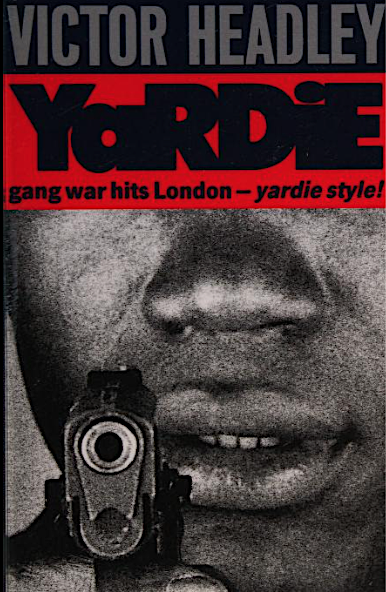
The original X Press edition was an unassuming, slim, pocket-sized paperback of just 162 pages, whose cover depicted a gun pointing directly at the reader. Sold through unconventional outlets and passed from reader to reader, the book became a cult classic of black British fiction before inspiring the 2018 film adaptation directed by Hackney-born Idris Elba.
A Journey into Hackney’s Criminal Underworld
The debut novel by Jamaican-born British writer Victor Headley opens at Heathrow Airport, where a young Jamaican drug courier known simply as ‘D’ arrives in Britain carrying a large amount of drugs.
Instead of delivering the consignment to the criminal organisation that sent him, he disappears into Hackney and establishes himself as an independent drug dealer, setting off a brutal struggle for power, money and survival.
Fast-paced, uncompromising and written extensively in Jamaican patois, Yardie departed from the conventions of mainstream British crime fiction. Headley’s characters inhabited a recognisable East London area, where Jamaican cultural influences, street politics, underground economies and established criminal networks intersected.
The title itself derives from Jamaican vernacular. Originally associated with Jamaica and its inhabitants, the term Yardie acquired a more specific association with Jamaican organised crime in Britain, particularly through media coverage during the 1980s and 1990s.
Victor Headley: An Unconventional Literary Voice
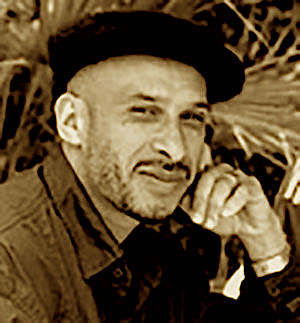
Born in Jamaica in 1959, Headley moved to London at the age of 12. Before establishing himself as a novelist, he held various jobs, working as a market trader, musician, songwriter, journalist and hospital courier. Interestingly, Yardie developed out of his attempts to write a screenplay, more than a quarter of a century before it reached the cinema.
Headley’s use of Jamaican speech, slang and street parlance gave his writing a distinctive identity. Rather than explaining Caribbean culture to an outside audience, he addressed readers already familiar with its language and social references. The result was a novel that challenged established assumptions about both black British literature and its readership.
The Hoxton Publishing Revolution
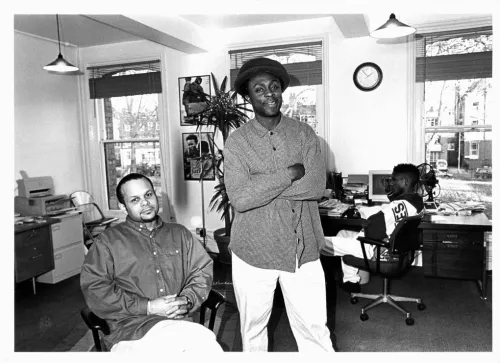
The success of Yardie was inseparable from the emergence of X Press, an independent black-owned publishing company with roots in Hoxton.
X Press founders, Dotun Adebayo and Steve Pope, had both worked for The Voice, Britain’s leading black newspaper, and recognised a substantial audience overlooked by mainstream publishers.
With limited financial resources, the pair produced an initial print run of just 1,000 copies. Adebayo typed the manuscript himself and even participated in the creation of the book’s distinctive gun-themed cover.
When conventional booksellers proved reluctant to stock the novel, its publishers turned to clothing shops, street traders, nightclub crowds and other non-traditional outlets. Promotion relied heavily on flyposting and personal recommendations, while deliveries were sometimes made by motorcycle.
The Bestseller Nobody Expected
The first 1,000 copies disappeared within ten days. By July 1993 approximately 20,000 copies had been sold, with subsequent reports putting sales beyond 30,000.
The industry’s attitude quickly changed. Pan Macmillan acquired reprint rights to Headley’s work, while Atlantic Monthly Press brought Yardie to the American market. According to Steve Pope, the novel’s commercial success also encouraged W H Smith to introduce dedicated sections for black writing, with other booksellers following suit.
Headley continued writing, publishing Excess in 1993 and Yush! in 1994, followed by Fetish, Here Comes the Bride, Off Duty and Seven Seals. Meanwhile, X Press developed into a major independent publisher of black popular fiction.
A Literary Success, a Cultural Controversy
Despite its popularity, Yardie generated considerable controversy. Some critics feared that its concentration on drug trafficking, violence and gang culture reinforced damaging stereotypes of Britain’s Caribbean communities, particularly at a time when sensationalist newspaper coverage frequently associated Jamaican identity with criminality.
Others defended Headley’s freedom to explore uncomfortable subjects without being expected to represent an entire community. The debate raised a broader question about whether black authors were afforded the same creative liberties as their white counterparts when writing about crime, poverty and violence.
Whatever one’s interpretation of the novel, its commercial achievement demonstrated that there was a substantial readership for black British popular fiction that the traditional publishing industry had underestimated.
From Paperback to the Big Screen
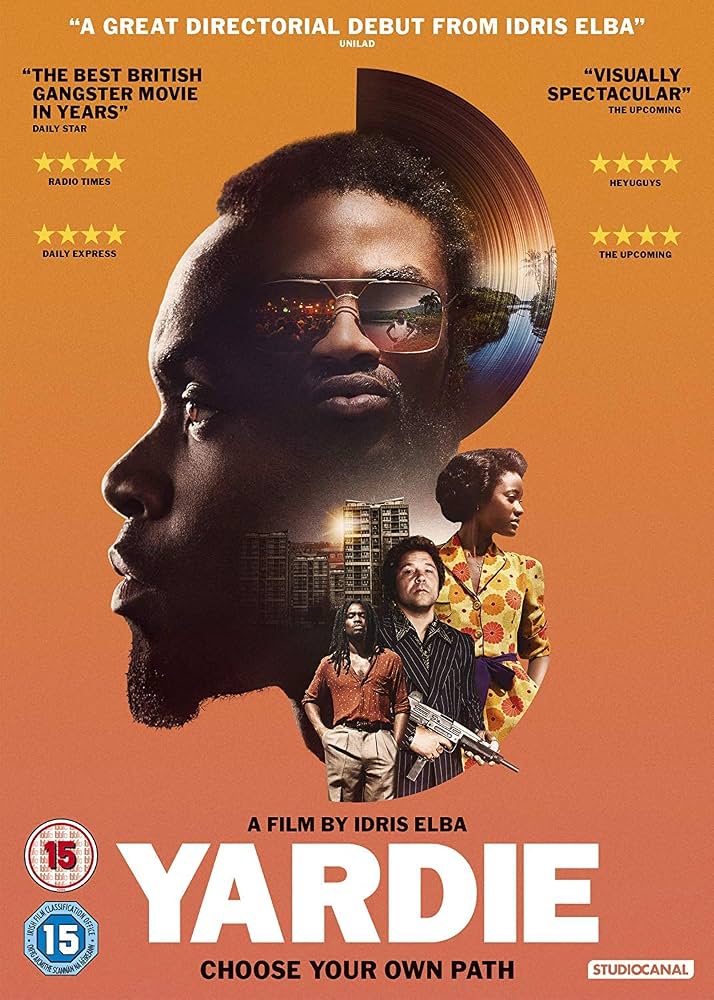
Among the young East Londoners who read Yardie shortly after its publication was Idris Elba. Growing up in Hackney in a family of Ghanaian and Sierra Leonean heritage, Elba had immersed himself in Jamaican-influenced music culture and spent part of his youth DJing.
Speaking to BBC Radio 1Xtra in 2018, he recalled how copies of the novel circulated among friends and described it as the first book he had read from beginning to end. Its cultural references resonated with his own experiences of growing up in East London.
When the opportunity to direct an adaptation arose, Elba drew upon those memories. Filming began in May 2017, with production taking place in Britain and Jamaica. The film received its world premiere at the Sundance Film Festival in January 2018 before opening in British cinemas at the end of August 2018.
Reimagining Headley’s Story
Adapted by screenwriters Brock Norman Brock and Martin Stellman, the film takes considerable liberties with the original novel, placing greater emphasis on D’s childhood, personal relationships and psychological motivations.
Beginning in Kingston in 1973, the adaptation follows D, played by Aml Ameen, as he struggles with the murder of his older brother, Jerry Dread. Ten years later, he is sent to London by Jamaican crime boss and music producer King Fox, reconnecting with his childhood sweetheart Yvonne and their daughter before becoming embroiled in a conflict with London gangster Rico, played by Stephen Graham.
Elba also deliberately strengthened the female characters, particularly Yvonne, played by Jamaican actress Shantol Jackson. The intention was to give women greater agency within a narrative traditionally dominated by men, while presenting D as a more emotionally complex protagonist.
Reggae, Dancehall and Sound System Culture
Music is central to the film’s reconstruction of Jamaican and East London life. D becomes involved with a sound system crew called High Noon, which provides an alternative avenue for recognition and belonging beyond the criminal world.
The adaptation captures elements of the soundclash tradition, in which rival crews compete for an audience’s approval through their record selections, microphone performances and musical exclusives. For Elba, these scenes reflected a cultural environment he knew personally.
Independent radio station NTS produced a special programme to accompany the film’s release which explored its musical foundations. It combined recordings by Dennis Brown, The Abyssinians and Burning Spear with archival sound system tapes from Aces International, Coxsone Outernational and Saxon Sound.
Celebrating Hackney’s Caribbean Heritage
In August 2018 Hackney Picturehouse in Mare Street hosted a free photographic exhibition entitled The Autograph Archive x Yardie. Organised by Autograph in partnership with StudioCanal, the exhibition featured 25 photographs documenting Britain’s black communities during the 1970s and early 1980s.
Contributors included Dennis Morris, Neil Kenlock, Syd Shelton, Charlie Phillips, Raphael Albert and Armet Francis, with an accompanying introduction by reggae historian and music journalist Lloyd Bradley.
The exhibition provided a valuable historical counterpoint to the fictional violence portrayed on screen, drawing attention to the wider experiences, creativity and cultural identity of Britain’s Caribbean communities.
From Street Literature to Hackney’s Museum Collection
A copy of Yardie is now preserved in Hackney Museum’s permanent collection, catalogued under object number 2010.111. The museum recognises the book’s significance not only as a work of fiction set in the borough but also as a catalyst for independent black British publishing.
Perhaps the most remarkable aspect of Yardie is that its success was initially driven by ordinary readers rather than literary critics, corporate marketing departments or established booksellers. A novel that once struggled to secure shelf space in Britain’s bookshops ultimately earned a place in its cultural history.
Leave a Reply