
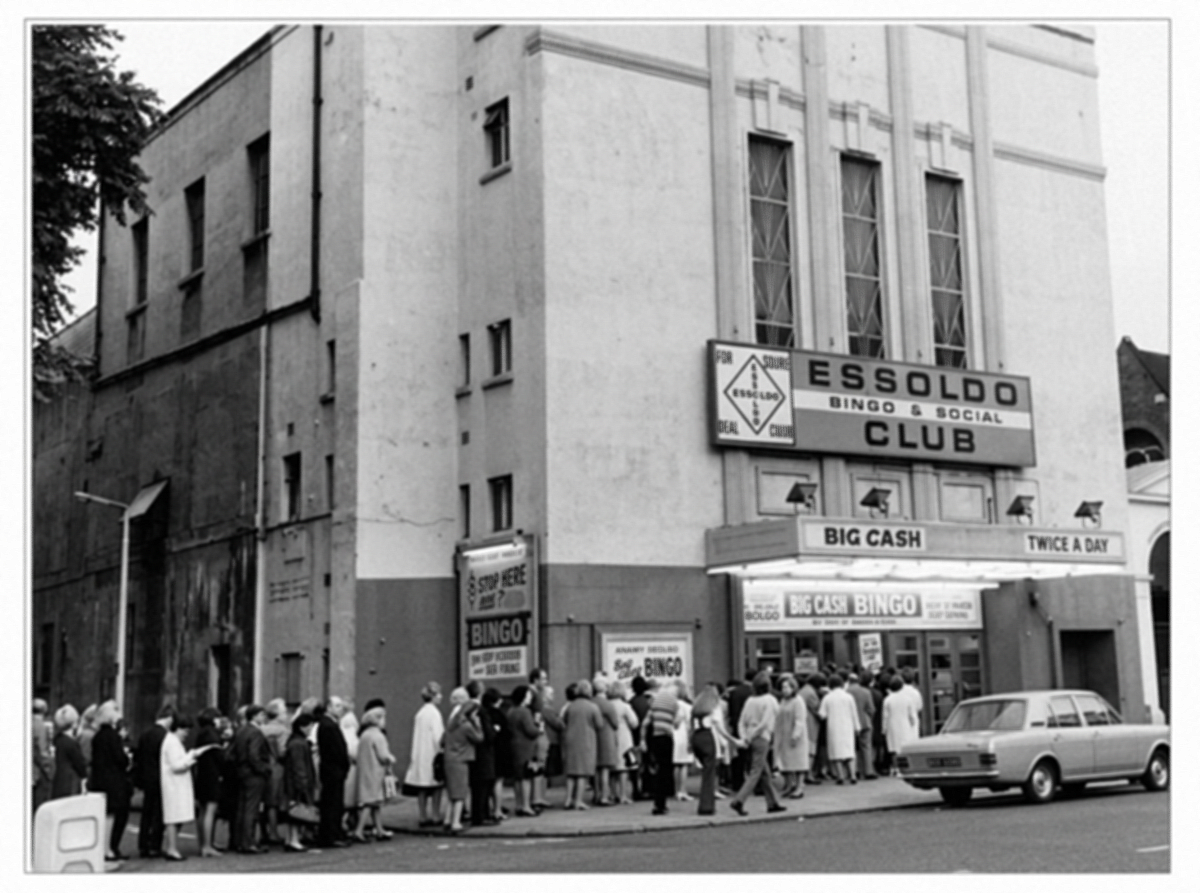
184 Mare Street, E8. Before the student flats, there was bingo. Before the bingo, there was the Essoldo. Before the Essoldo, there was the Empress. Before the Empress, there was a chapel. Welcome to one of Hackney’s great disappearing acts.
From Presbyterian Chapel to Cinema
The story begins in 1777, when St Thomas’s Square Presbyterian Chapel was established on the site. The chapel was part of Hackney’s long-established tradition of religious dissent, with Nonconformist congregations playing an important role in the area’s social and intellectual life.
The building was enlarged in 1824, reflecting the growth of both the congregation and the surrounding neighbourhood as Hackney expanded beyond its historic village centre. By the beginning of the 20th century, however, the chapel’s religious life had come to an end.
The building was sold to 20th Century Cinemas in 1911 and converted into the Empress Electric Theatre, opening as a cinema in May 1912. Around 1,100 people could be accommodated inside its Beaux-Arts-style auditorium and an organ provided musical accompaniment during the silent-film era.
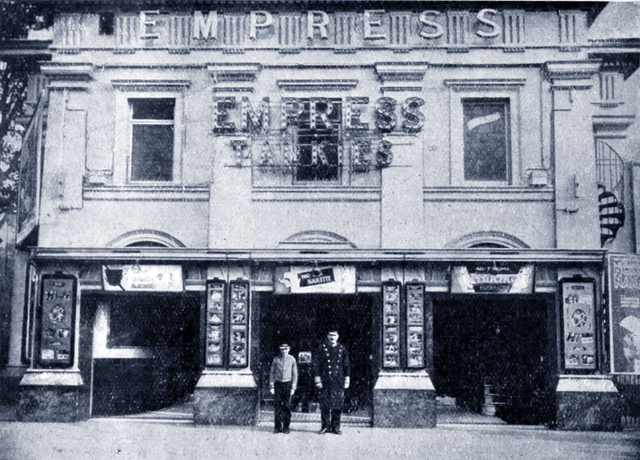
The Empress Gets an Art Deco Makeover
The cinema underwent a dramatic transformation in 1933, when cinema operator Lou Morris acquired the site. Rather than simply redecorating the existing auditorium, he had virtually everything removed apart from the building’s four external walls.
The redesign was undertaken by George Coles, one of Britain’s leading cinema architects, whose work helped establish the distinctive Art Deco style associated with many of the country’s inter-war picture palaces. The rebuilt cinema was substantially larger and more elaborate: seating increased to around 1,650-1,670, while the interior was completely remodelled and the façade given a striking modern appearance.
A new theatre organ was also installed: most detailed accounts point to a Compton, with a three-manual console and five ranks of pipes, though at least one local source instead recalls a Christie organ from this period. The cinema reopened on the 4th of September 1933, initially continuing as the Empress Electric Theatre, with ‘So This Is Africa’ and ‘Our Betters’ on the opening programme.
The venue later became known simply as the ‘Empress Cinema’ and the 1950s brought another major change. The arrival of television and changing leisure habits would eventually undermine the huge audiences on which cinemas depended, but the Empress continued to attract local crowds. It was also part of the era’s technological shift towards widescreen cinema, with the grand auditorium providing the kind of scale that made new formats such as CinemaScope particularly spectacular.
Becoming the Essoldo
In 1955 the cinema was acquired by the Newcastle-based Essoldo Circuit, founded and controlled by Sol Sheckman, and was renamed the Essoldo Cinema. The change reflected the increasingly concentrated nature of Britain’s cinema industry, as independent picture houses were absorbed into larger regional and national circuits.
The Essoldo continued operating through the 1950s and 1960s, but by then the golden age of the neighbourhood cinema was coming to an end. Television ownership had risen dramatically, while changing patterns of entertainment and competition from other forms of leisure were reducing cinema attendances.
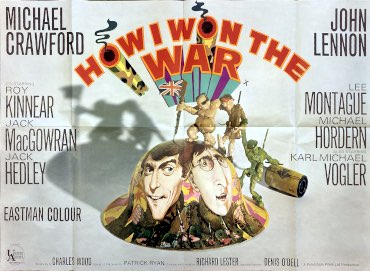
The Essoldo ultimately closed as a cinema on the 18th of November 1967. Its final programme was the wartime satire ‘How I Won the War’ starring John Lennon accompanied by The Music Box Kid. It brought to an end more than half a century in which the building had served as one of Mare Street’s principal cinemas.
From Picture House to Bingo Hall
The closure did not immediately spell the end of the building’s life as an entertainment venue. Its enormous auditorium was ideally suited to another increasingly popular British pastime: bingo. During the following decades the former cinema operated as a bingo hall and was eventually known as a Top Rank Bingo Club.
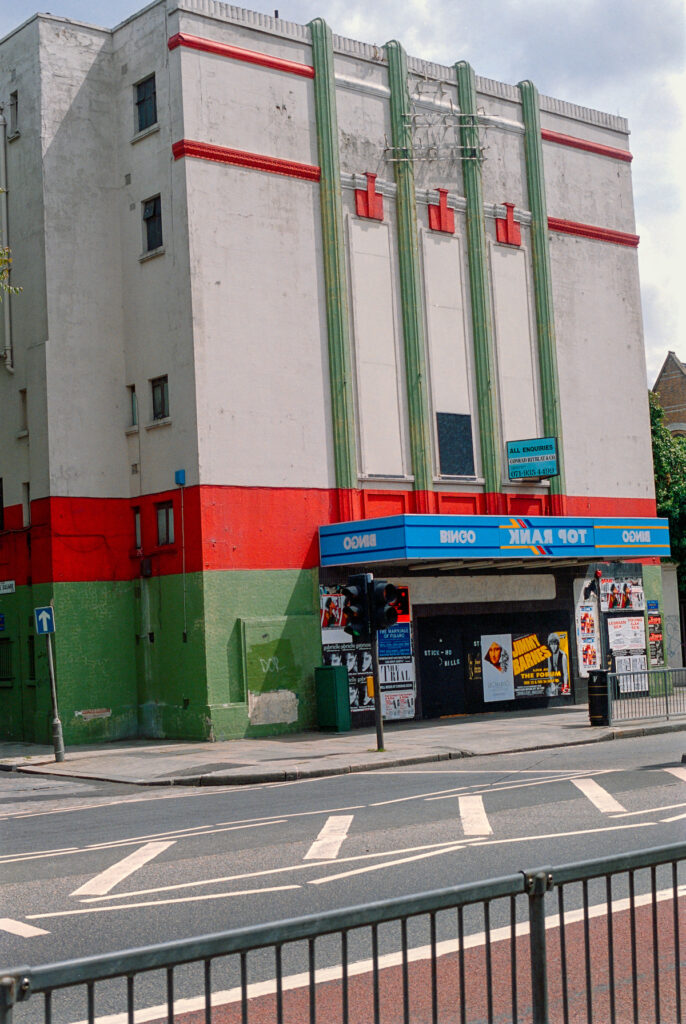
The change from cinema to bingo was more logical than it might initially appear. Both businesses depended upon large numbers of people gathering under one roof and the building’s spacious auditorium, extensive seating and prominent position on Mare Street made it well suited to the new use. Instead of watching films on the giant screen, local residents came to play bingo, socialise and take part in a very different form of mass entertainment.
The bingo operation continued for decades, but eventually succumbed to the same wider changes affecting traditional entertainment venues. The bingo hall closed in 1993, bringing the building’s long career as a place of popular entertainment to an end.
Demolition and What Remains Nearby
The old building did not survive for long after the bingo hall closed. It was demolished in August 1995, removing almost all visible evidence of the chapel, Empress and Essoldo from Mare Street. The site was subsequently redeveloped for student accommodation associated with Cordwainers College, giving the location yet another function.
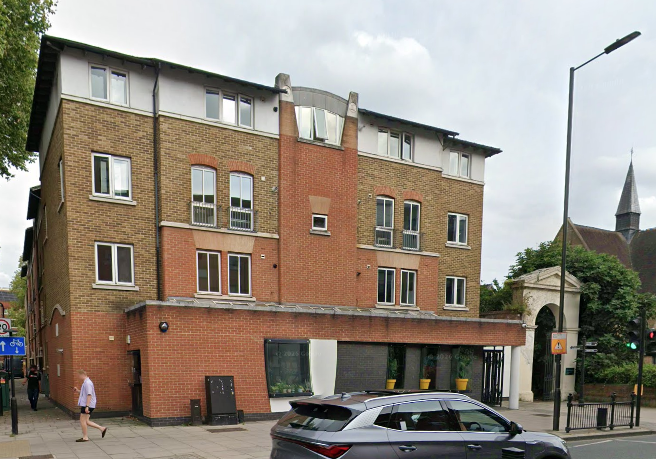
A short distance away, on the former burial ground of the old Nonconformist chapel (now laid out as public gardens off Mare Street) an early-19th-century archway still marks the entrance from the street, along with a scattering of surviving chest tombs. It’s a reminder that the chapel’s presence in this part of Hackney extended beyond the building itself, even if it isn’t part of the redeveloped 184 Mare Street plot.
Leave a Reply