
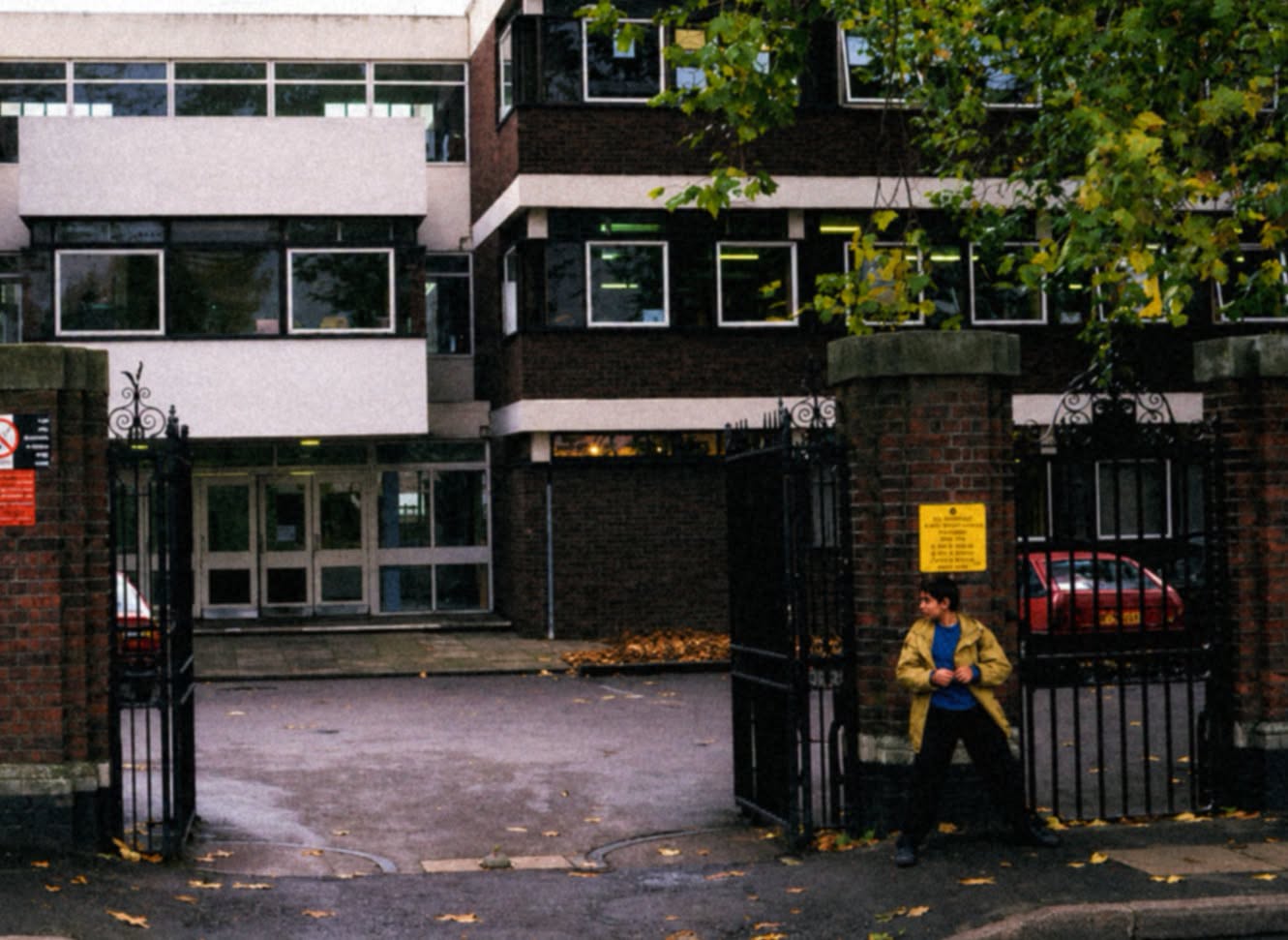
Hackney Downs School was one of Lower Clapton’s defining educational institutions for over 120 years, with its history reflecting both the aspirations and the challenges of one of London’s fastest-changing boroughs. From its origins as a prestigious Victorian grammar school to its controversial closure in 1995, the school’s story mirrors the wider social, political and demographic transformation of Hackney.
From Victorian Grammar School to Hackney Institution
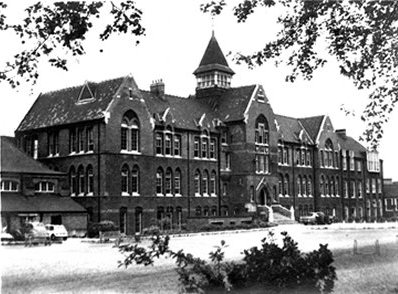
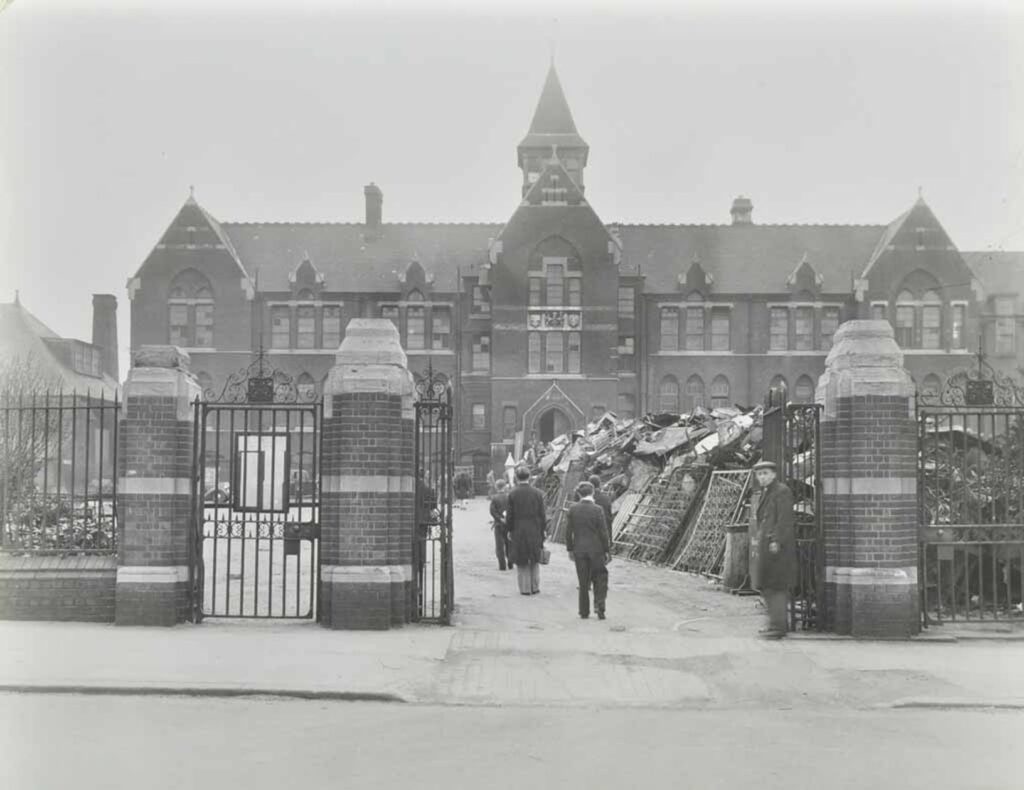
Hackney Downs School was founded in 1876 as ‘The Grocers’ Company’s School’ by the Worshipful Company of Grocers following the reforms introduced by the Endowed Schools Act 1869. The impressive Gothic Revival building on Downs Park Road was intended to provide a modern education for the sons of the growing middle classes living in Hackney, then regarded as one of London’s expanding suburban districts.
Boys entered through competitive examinations and paid annual fees, receiving an education that combined traditional academic subjects with practical instruction suited to Victorian commerce and industry. When responsibility transferred to the London County Council in 1906, the school became Hackney Downs School.
Although the school’s governance changed, its academic standards remained exceptionally high. Scholarships enabled talented boys from less affluent backgrounds to attend, making the school increasingly meritocratic while preserving its reputation for rigorous teaching.
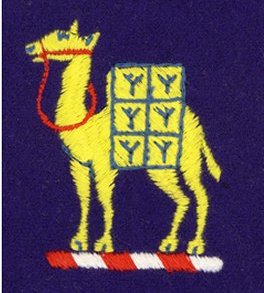
The school badge continued to reflect its Grocers’ Company origins throughout the years, incorporating the camel and cloves that are still remembered by generations of former pupils through the ‘Clove Club’.
The ‘Jewish Eton’
During the first half of the 20th century, Hackney changed dramatically. Many middle-class families moved towards London’s newer suburbs while large numbers of Jewish families, including many with roots in Eastern Europe, settled in Hackney.
Through scholarship schemes, academically gifted boys from working-class Jewish households gained places at Hackney Downs, transforming the social composition of the school without diminishing its academic excellence. By the 1930s and into the post-war years the school had acquired the affectionate nickname the ‘Jewish Eton’.
The school became renowned for producing exceptional scholars, professionals, artists and public figures. The atmosphere combined high academic expectations with an unusually vibrant intellectual culture.
English and drama departments became particularly influential, helped by inspirational teachers such as Joe Brearley, whose encouragement had a lasting impact on future Nobel Prize-winning playwright Harold Pinter. Former pupils later recalled an environment where literature, theatre and debate were valued as highly as examination success.
War, Fire and Renewal
Like many London schools, Hackney Downs was profoundly affected by the Second World War. Following the outbreak of war in 1939, hundreds of pupils and staff were evacuated to Norfolk, where education continued for almost six years.
Boys were housed in villages including King’s Lynn, Outwell and Upwell, while many helped with agricultural work alongside their studies. Future actor Michael Caine, then still Maurice Micklewhite, attended the evacuated school, as did Harold Pinter and painter Leon Kossoff. Their wartime experiences would later influence their creative work.
The school buildings themselves suffered bomb damage during the Blitz, but an even greater setback came in March 1963 when a devastating fire, started by stage lighting during a school production, destroyed much of the magnificent Victorian central building.
Although new accommodation was constructed and completed by the late 1960s, many former pupils felt that something of the school’s historic character disappeared with the original architecture. Even so, teaching standards remained strong and the school continued to enjoy considerable academic prestige during this transitional period.
Becoming a Comprehensive
Educational reforms transformed Hackney Downs during the late 1960s. Grammar school selection was gradually abolished and the school became a comprehensive, opening its doors to boys of every academic ability. The change coincided with rapid demographic shifts across Hackney as new communities from the Caribbean, South Asia, Turkey and elsewhere made the borough one of Britain’s most culturally diverse areas.
Despite predictions that standards would collapse, the school initially adapted remarkably well. It developed an increasingly progressive ethos and reflected the changing character of the borough.
By the 1970s and early 1980s pupils came from dozens of linguistic and cultural backgrounds, while subjects such as English embraced contemporary literature and drama alongside the traditional curriculum. Former staff have described the school as intellectually ambitious despite the enormous challenges presented by poverty, language barriers and shrinking public resources.
Crisis and a Controversial Closure
The difficulties that eventually overwhelmed Hackney Downs were not solely educational. Throughout the 1980s Hackney experienced severe economic decline, rising unemployment and cuts to public spending.
The school increasingly served communities facing multiple disadvantages. By its final years more than 70% of pupils spoke English as an additional language, many arrived with significant gaps in literacy and numeracy, and around half came from households without employment. Maintaining standards under such circumstances proved exceptionally difficult.
Problems escalated after a lengthy closure during an asbestos dispute in 1986, leading to major disruption and declining enrolment. Following a highly critical Ofsted inspection in 1994, the Conservative government intervened, appointing an Education Association to take control.
National newspapers labelled Hackney Downs “the worst school in Britain”, a description that many former teachers, pupils and educational historians have argued was deeply unfair and ignored the wider social conditions affecting the school.
Critics have long maintained that Hackney Downs became a political symbol during debates over failing schools, rather than receiving the sustained investment needed to recover. The school finally closed on the 31st of December 1995, ending 119 years of continuous education on the site.
Distinguished Former Pupils and Lasting Legacy
Despite its difficult final chapter, Hackney Downs produced an extraordinary number of influential alumni across literature, theatre, science, politics, design and business.
Among its most celebrated former pupils were Nobel Prize-winning playwright Harold Pinter, actor and playwright Steven Berkoff, pioneering graphic designer Abram Games, actor Michael Caine, artist Leon Kossoff, nutritionist John Yudkin, businessman Lord Levy and numerous academics, judges, scientists and public servants. Their achievements testify to the remarkable educational standards the school maintained for much of its history.
Today the original Victorian buildings have disappeared and the site is occupied by Mossbourne Community Academy, one of London’s highest-performing state schools, which opened in 2004. Meanwhile, the legacy of Hackney Downs lives on through the Clove Club, whose members continue to preserve photographs, documents and memories of the school, alongside collections held by Hackney Archives and academic institutions.
Leave a Reply