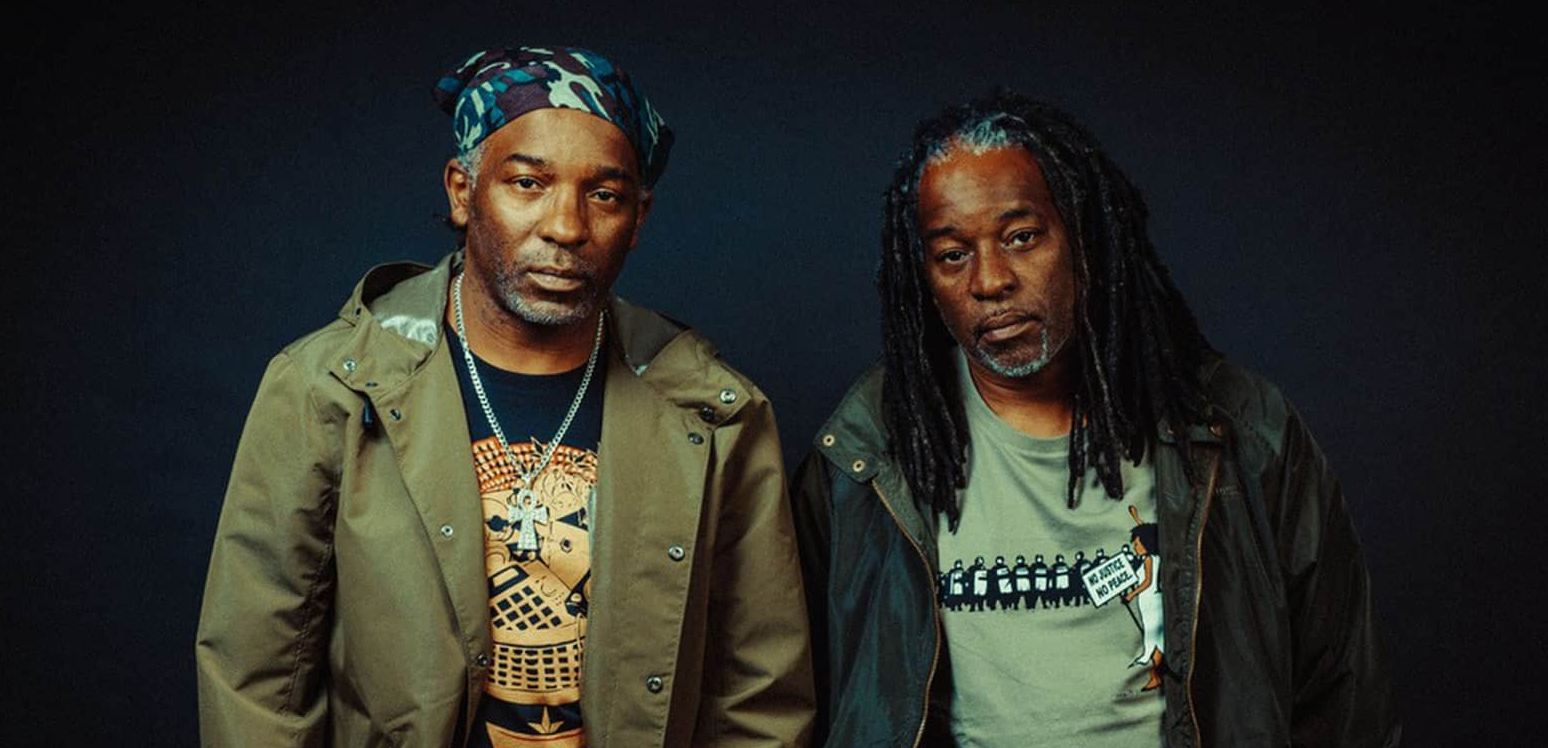
The Ragga Twins, brothers Trevor and David Destouche from Hackney, helped revolutionise British underground music by bringing Jamaican reggae and dancehall traditions into the emerging world of hardcore, jungle and drum & bass.
Now preparing to celebrate 35 years of the Ragga Twins with a special event in Brixton, their journey from local sound systems and Dalston’s legendary Four Aces Club to international stages tells the story of how Hackney’s Caribbean musical heritage helped shape an entirely new generation of British dance music.
Growing Up in Hackney’s Sound System Culture
The Ragga Twins’ story begins in Hackney during the 1970s and early 1980s, when reggae, roots, dub and dancehall were an important part of everyday life for many of the borough’s Caribbean families. Music circulated through specialist record shops, community centres, house parties and sound systems, creating an independent cultural network that operated largely beyond the mainstream recording industry.
Trevor Destouche, better known as ‘Flinty Badman’, and his older brother David, known as ‘Deman Rockers’, grew up listening to the reggae records their parents played at home, alongside influential radio presenters such as David Rodigan and Tony Williams. Despite their eventual stage name, they are brothers rather than twins, with Deman approximately a year older than Flinty.
Their introduction to sound system culture began remarkably early. Deman remembered visiting an uncle who owned a sound system, while the brothers experimented with homemade speakers, sometimes using cardboard boxes decorated to resemble enormous bass cabinets. They dismantled cassette players, extended electrical wiring and salvaged speakers from old televisions, attempting to recreate the powerful sounds they heard at reggae dances.
Sir Cruise and Hackney’s Teenage Sound Systems
While still at school, Flinty and several friends built their own sound system, which they named Sir Cruise. The project began during woodwork lessons, where the boys constructed speaker cabinets and assembled equipment. Rather than simply treating it as a school project, they were determined to put their creation to use.
Flinty’s uncle lived close to the school, and the group installed their equipment in his basement. They would visit during lunch breaks and after school to practise, eventually organising small weekend blues parties attended by their friends. Flyers were distributed and admission charged, giving the teenagers their first experience of running their own musical events.
These early sessions belonged to a much wider network of young Hackney sound system enthusiasts. Among those involved in the local scene were future electronic music producers PJ and Smiley, who would later form Shut Up and Dance. Their sound systems sometimes competed against one another, establishing relationships that would prove crucial to the development of British rave music years later.
Jah Marcus, Unity and the Hackney Reggae Circuit
During the early 1980s the brothers began establishing themselves as MCs on London’s reggae sound systems. Their early experiences included Jah Marcus, while Flinty also performed with Hackney crews such as Surge, Sledgehammer, City Rebel and Eastman Sound.
Flinty recalled attending regular Friday sessions organised by Surge Sound System, where the late Sean Major helped introduce him to the crew. These gatherings formed part of Hackney’s thriving reggae circuit, providing opportunities for young performers to develop their skills, experiment with lyrics and build their reputations before live audiences.
The brothers eventually became closely associated with Unity Sound System, one of North London’s most prominent reggae sounds owned by Robert ‘Ribs’ Fearon, where their partnership developed into a formidable musical combination. The brothers became known for their rapid lyrical exchanges, contrasting vocal styles and ability to move effortlessly between different rhythms.
Deman was already recording before the Ragga Twins existed. In 1984, he released ‘Iron Lady’ on Unity Records, a politically charged recording built around the famous Stalag reggae rhythm and directed at Margaret Thatcher’s government. It provides an early example of how London’s reggae performers used music to comment on the political and social conditions surrounding them.
The Four Aces Club: Dalston’s Reggae Stronghold
One of the most important venues in the brothers’ early careers was the Four Aces Club in Dalston. Situated at 12 Dalston Lane, the club became an important meeting place for London’s Caribbean communities, hosting reggae dances, sound system sessions and performances by established and emerging artists.
Unity Sound System was closely associated with the venue and Flinty has recalled performing in its crowded, intimate atmosphere. Unlike modern festival stages where artists can be separated from audiences by considerable distances, the Four Aces brought performers and dancers into immediate contact.
The crowds could press so close to the equipment that the vibrations and movement sometimes caused record needles to jump. MCs had to react instantly to the audience, changing lyrics, encouraging responses and maintaining the energy of the dance.
The Four Aces also occupied an important position in the evolution of London’s underground music. Its reggae and soul history preceded its later association with acid house and rave culture, making it part of the wider transformation that would eventually connect Jamaican sound systems with British electronic dance music.
For the Ragga Twins, these experiences provided more than a place to perform. They developed the techniques that would later distinguish their recordings: improvisation, call-and-response, rhythmic chanting and the ability to command an audience without relying on conventional song structures.
When Unity Took Over Hackney Downs
One particularly memorable episode in the brothers’ history took place in Hackney Downs park, where a Carnival-style outdoor event brought together sound systems from different parts of London.
Unity’s owner, Robert Fearon, was generally reluctant to take his equipment to outdoor events, including Notting Hill Carnival. When the brothers discovered that South London’s Saxon Sound System would be appearing at Hackney Downs, they were determined that Unity should represent its home territory.
Flinty remembered going to Fearon’s house and repeatedly urging him to participate. Eventually he agreed and Unity’s equipment was transported to the park in a beige truck. Deman recalled the excitement as the vehicle entered Hackney Downs: people began following it across the grass, waiting for the sound system to be assembled. Some spectators even helped unload the heavy speaker cabinets so the music could begin.
For a sound system normally associated with indoor dances, the event was an unusual opportunity to perform in the open air before its own local community. Both brothers remembered the occasion as a major success, with people continuing to discuss it afterwards.
Leaving Unity and the Birth of the Ragga Twins
By the late 1980s, Flinty and Deman had developed substantial reputations on the reggae circuit, performing across Britain and sharing stages with established Jamaican artists. Yet their success as live performers was not translating into the recording opportunities or financial rewards they wanted.
Both brothers were working ordinary jobs alongside their musical commitments, often spending Thursday through Monday travelling between dances and performing long hours. Despite their popularity, relatively few of their lyrics were being recorded and they increasingly felt that their creative work was being wasted.
Deman has recalled that their final dance with Unity took place on NYE 1989. They had decided to leave the sound system and pursue careers as recording artists, although they had no clear idea that their next opportunity would come through electronic dance music.
The breakthrough arrived in 1990 through an old Hackney connection. Carlton ‘Smiley’ Hyman and Philip ‘PJ’ Johnson, the producers behind ‘Shut Up and Dance’, had known the brothers since childhood. PJ had attended primary school with them, while Smiley had been involved in the local sound system scene.
Shut Up and Dance had sampled Deman’s voice from a Unity cassette recording for their track ‘Lamborghini’. When Smiley approached him about using the sample, Deman asked whether the producers could help him and Flinty make their own records.
Initially the brothers wanted to continue as individual artists under their existing names. PJ and Smiley suggested that their contrasting styles would work better together and the name ‘Ragga Twins’ emerged after several alternatives were considered. The decision would change the course of their careers.
‘Spliffhead’, ‘Hooligan 69’ and the Birth of a New Sound
Shut Up and Dance were already experimenting with hip-hop, electronic dance music and accelerated breakbeats. Their collaboration with the Ragga Twins introduced the brothers’ reggae and dancehall delivery into a musical environment increasingly associated with acid house and hardcore.
Early recordings including ‘Spliffhead’, ‘Wipe the Needle’, ‘Illegal Gunshot’ and ‘Hooligan 69’ helped establish the duo’s reputation. Their sound combined heavy basslines, chopped breakbeats, sampled vocals and Jamaican-influenced lyrical delivery, creating music that crossed boundaries between previously distinct underground scenes.
The recording of ‘Spliffhead’ illustrates the producers’ experimental approach. Flinty recalled improvising various phrases in the studio when PJ and Smiley seized upon a short vocal line, ‘Ragga Twins dem bout’, and decided to repeat it throughout the track. What the brothers regarded as a fragment of a longer performance became the record’s defining vocal hook.
The brothers later explained that they did not initially consider themselves jungle artists. They were reggae performers working with producers who were experimenting with new electronic rhythms. The music that would eventually become jungle had not yet acquired a settled name or identity.
Their contribution was nevertheless substantial. They demonstrated how the techniques of Jamaican sound system performance could operate within British breakbeat music, helping establish a musical approach that other producers and MCs would develop throughout the 1990s.
‘Reggae Owes Me Money’: An Album with a Message
In 1991 the Ragga Twins released their debut album, ‘Reggae Owes Me Money’, through Shut Up and Dance Records. Its provocative title was a direct reference to their experiences in the reggae industry.
The brothers have explained that the title was not intended as a criticism of reggae music itself. Rather, it expressed their frustration with the people managing their careers, the limited opportunities to record and the inadequate financial rewards they had received despite years of performing.
The album combined reggae and dancehall vocals with hip-hop, breakbeats and electronic production. Tracks such as ‘Illegal Gunshot’ and ‘Love Talk’ gave the brothers space to deliver more extended lyrics, while the faster dancefloor recordings used their voices as rhythmic elements within the production.
At a time when hardcore rave music was developing rapidly, ‘Reggae Owes Me Money’ helped demonstrate that Caribbean vocal traditions and electronic breakbeats could form the basis of a distinctive British sound. The album is now widely recognised as an important precursor to jungle, although the genre emerged through the contributions of numerous producers, DJs, MCs and sound systems rather than any single recording or artist.
From Reggae Dances to the Rave Explosion
Remarkably, the Ragga Twins initially performed at raves without being regular participants in rave culture themselves. After finishing their sets, they often left to find a reggae dance elsewhere, remaining more comfortable in the musical environment where they had grown up.
Their early appearances also brought them into contact with audiences very different from those they had encountered on the reggae circuit. Flinty recalled arriving at a show in Birmingham and being surprised to find a predominantly white crowd. The brothers initially wondered whether anyone would recognise their music, only to receive an enthusiastic response when they were introduced.
They also brought reggae performance traditions into the rave environment. During their sets, they would demand pull-ups or rewinds, stopping and restarting records in response to the crowd. Such practices had long been established in Jamaican sound system culture but were less familiar to some early rave audiences.
A major turning point came in May 1991, when the brothers performed at the World Party rave at Chelmsford County Showground. Instead of leaving immediately afterwards, they stayed to experience the event, discovering the scale and atmosphere of the rapidly expanding rave movement.
By the early 1990s their recordings were reaching audiences through underground clubs, pirate radio and increasingly mainstream broadcasting. The brothers also hosted a programme for Steve Jackson on Kiss FM in 1991 and recorded sessions for John Peel’s BBC Radio 1 programme. Their journey from Hackney’s reggae dances to national radio reflected the extraordinary speed with which Britain’s underground music culture was changing.
Jungle, Pirate Radio and the 1990s
As hardcore developed into jungle during the early 1990s, the Ragga Twins became recognised as important pioneers of the emerging genre. Their vocal approach helped establish a direct connection between Jamaican dancehall, British sound system culture and the increasingly complex breakbeat production associated with jungle.
The brothers were part of a wider generation of performers, including Navigator, Sweetie Irie, Tenor Fly, Tippa Irie and General Levy, who brought reggae and dancehall traditions into the new musical landscape.
Pirate radio was central to jungle’s development, providing a platform for records and performers largely ignored by commercial broadcasters. Stations such as Kool FM helped build a dedicated audience through specialist shows, live MC performances and recordings circulated on cassette.
Flinty has particularly vivid memories of Kool FM’s third birthday celebration at the London Astoria in November 1994, when crowds filled the venue and surrounding streets. The event demonstrated how a musical movement rooted in small clubs, sound systems and pirate broadcasting had developed into a major part of London’s youth culture.
The brothers also witnessed tensions within jungle as its popularity grew. During the mid-1990s, some producers and promoters moved towards a less reggae-influenced style of drum & bass. Flinty and Deman have been outspoken in their criticism of attempts to distance the genre from its Caribbean foundations.
‘Rinsin’ Lyrics’ and Beyond
In 1995 the Ragga Twins released their second album, ‘Rinsin’ Lyrics’, through EMI’s Positiva label. The record explored a broader musical palette, incorporating elements of reggae, hip-hop and jazz alongside contemporary electronic production.
Contributions from Geoff Wilkinson and Mel Simpson of Us3 reflected the brothers’ growing involvement with musicians working beyond the hardcore and jungle scenes. Tracks including ‘Freedom Train’, ‘Money’ and ‘Mash It Up’ demonstrated their versatility as vocal performers.
Their earlier recordings continued to attract attention long after their original release. In 2008, Soul Jazz Records issued ‘Ragga Twins Step Out’, revisiting their influential Shut Up and Dance material and introducing the music to listeners discovering the origins of jungle and British breakbeat culture.
The brothers also developed a long-running partnership with electronic production group Aquasky, recording tracks including ‘Loko’, ‘Dem No No We’ and ‘Superbad’. These collaborations helped carry their distinctive vocal style into breakbeat, bass music and drum & bass.
From Hackney to Skrillex and International Stages
In 2014 the Ragga Twins reached another international audience through their collaboration with American electronic producer Skrillex on ‘Ragga Bomb’, released on his album ‘Recess’.
The collaboration began when Skrillex used material from a vocal sample pack the brothers had recorded with Passenger. He subsequently invited them to contribute additional vocals, bringing their unmistakable sound into the contemporary dubstep scene. The recording introduced their voices to younger listeners who might have been unfamiliar with their early 1990s releases, demonstrating the continuing influence of reggae-derived MC techniques across different generations of electronic music.
In 2017, the brothers collaborated with producer Wrongtom on ‘In Time’, released through Tru Thoughts, followed by the dub companion ‘In Dub’. These recordings returned to the reggae foundations of their careers while retaining the experimental approach that had characterised their work since the beginning.
Deman Rockers’ Injury and the Music Community’s Response
In October 2024 Deman Rockers suffered a serious spinal injury following a fall outside his home. Hospital investigations identified an existing spinal condition and he underwent emergency surgery, beginning a difficult period of treatment and rehabilitation.
The news prompted considerable support from the jungle and drum & bass community. The ‘Last Night A DJ Saved My Life Foundation’ organised fundraising efforts, while a benefit event titled ‘A Dance for Deman Rockers’ was held in Brixton in December 2024. The line-up included General Levy, Fabio & Grooverider, Ray Keith, Kenny Ken and Jumpin Jack Frost, alongside numerous other artists connected to the brothers’ musical history.
In January 2025 the Ragga Twins released ‘We Are Junglists’, featuring the late MC Fats, who died in 2023. The recording and its accompanying video paid tribute to the much-loved jungle vocalist and celebrated the enduring connections within the scene.
Deman has subsequently spoken about the encouragement he receives from performing alongside his brother, while continuing to work towards recovery. Their commitment to making music has remained an important part of their lives.
Hackney’s Place in the History of Jungle
The Ragga Twins helped bring the energy, language and traditions of Jamaican sound systems into British rave culture, leaving a lasting mark on jungle, drum & bass and the generations of artists who followed.
What began in Hackney’s reggae underground became an international musical legacy. On the 5th of December 2026 the brothers will celebrate 35 years of the Ragga Twins with a special event at Electric Brixton, a milestone made even more significant by Deman’s recent health struggles.
From the Four Aces in Dalston to stages around the world, Flinty and Deman have come a long way, but Hackney remains where it all began.
Leave a Reply