
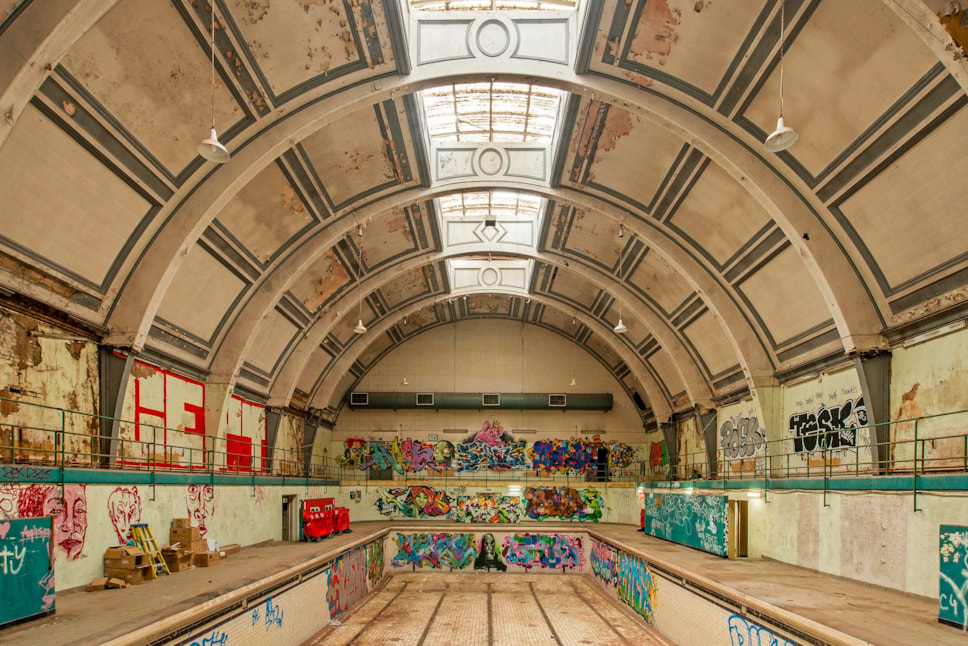
Haggerston Baths in Hackney, a landmark Edwardian public bathhouse between Laburnum Street and Whiston Road, served the local community for nearly a century. Designed by architect Alfred Cross, the Grade II listed building is a striking example of Edwardian Baroque architecture and remains an important part of Hackney’s social and architectural heritage.
Origins and Early Years
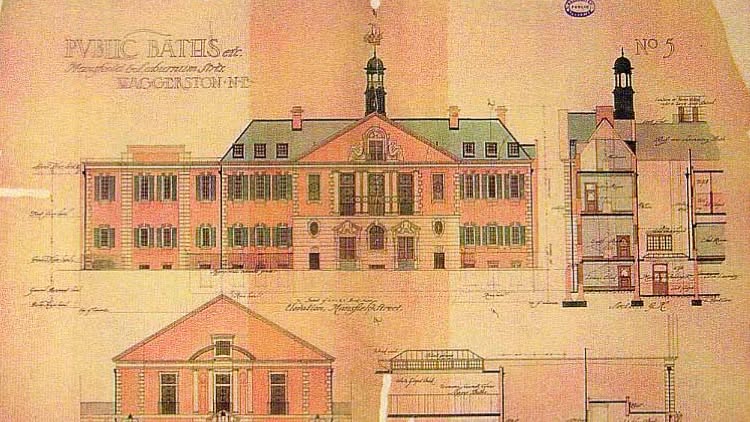
Haggerston Baths, located between Laburnum Street and Whiston Road, was a landmark public facility that served the community for nearly a century before its closure in 2000. Designed by Alfred Cross, who specialised in public bathhouses, the building is a prominent example of Edwardian Baroque architecture and is now Grade II listed.
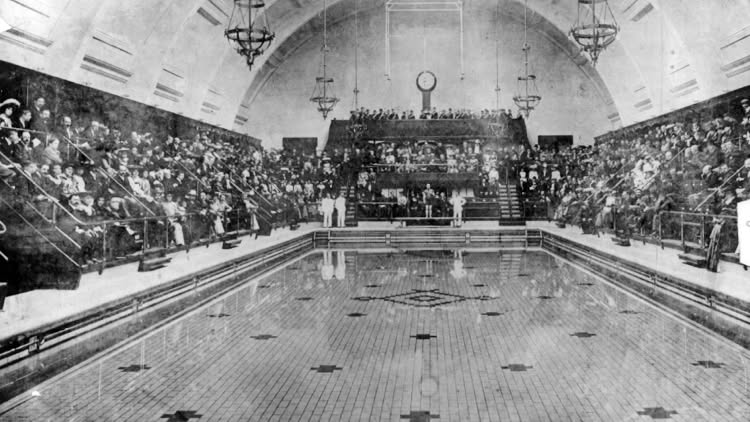
The baths officially opened on the 25th of June 1904 at a cost of approximately £60,000. They were built in response to an outbreak of cholera in the area and at the time they were considered a necessity rather than a luxury, as most local working-class homes lacked private bathing facilities. The original complex included a large swimming pool, 91 ‘slipper baths’ for individual washing and a 60-stall public laundry, reflecting their vital role in everyday urban life.
Change and Decline
In 1941, during World War II, the building suffered bomb damage, forcing the pool to close temporarily. Further alterations came in the 1960s when original changing cubicles and poolside seating were removed to make way for a balcony. In the 1980s, the main pool was shortened from 30.5 metres to 25 metres to accommodate a teaching pool.
Haggerston Baths were shut down by Hackney Council on the 11th of February 2000 due to structural health and safety concerns and rising maintenance costs. What was meant to be a temporary closure became long-term, leaving the building to deteriorate while campaigners fought to save it.
Dereliction and Campaigns
For years, the interior resembled a time capsule. The main pool remained tiled and largely intact, though empty and eventually covered in graffiti. The council spent around £100,000 annually securing the site, yet it was frequently breached, becoming known for squatting and illegal raves.
The building was added to the Historic England Heritage at Risk Register in 2014 and named one of the UK’s most endangered buildings by the Victorian Society. Local groups, including Save Haggerston Pool, continued campaigning, with events such as the ‘Laburnum Street Party’ marking its centenary and keeping public attention on its future.
Regeneration and Uncertain Future
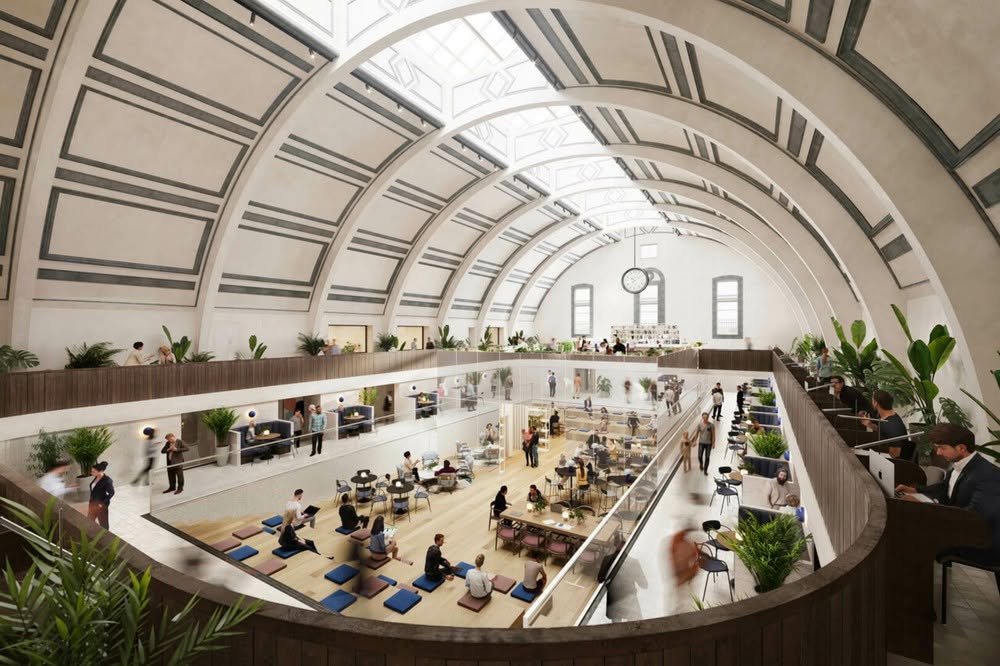
After standing derelict for over two decades, the building was set to undergo a £25 million+ regeneration led by Castleforge and designed by Squire & Partners. The plans aimed to transform it into a multi-use hub with offices, creative workspaces, a café, a gym and exhibition spaces, while preserving key features such as the red-brick façade, chimney and distinctive cupola topped with a ‘Golden Hind’ weathervane.
However, as the years passed, momentum around the project began to fade. Earlier setbacks, including the loss of a £5 million restoration grant after the 2009 financial downturn and a cyber attack that erased the original planning application, had already slowed progress. By March 2025, nearly a decade after the scheme first gained public backing, Guy Nicholson told the Hackney Society that Castleforge was backing out of the project.
This latest development has once again cast uncertainty over the future of Haggerston Baths, raising fresh questions about whether the restoration will ever happen.
Leave a Reply