
Martello Street in London Fields these days looks like any other quietly gentrified Hackney terrace, but for seven years one of its homes hid a dark secret: a murdered man sealed in a concrete tomb beneath the cellar, completely unknown to the housemates living above.
A Squat on the Margins of London Fields
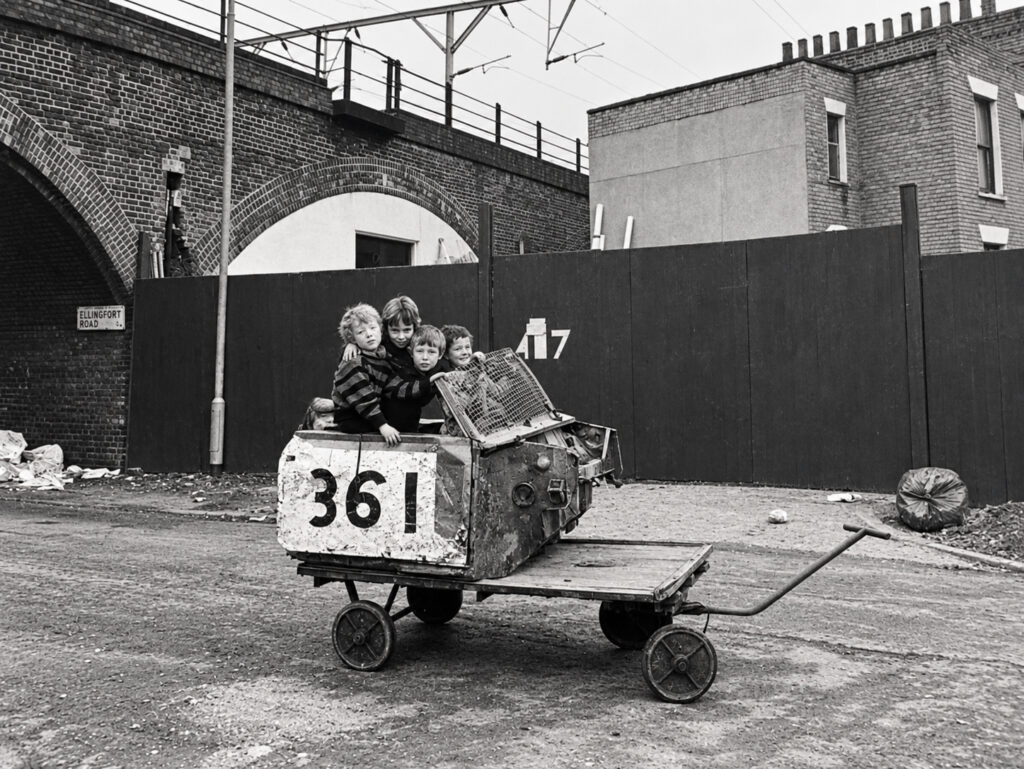
In 1990 Martello Street bore almost no resemblance to today’s London Fields. The area sat within one of Hackney’s most established squatting enclaves, a network of short-life housing that had grown up around the street since at least the late 1970s.
Artists’ organisations Acme and SPACE had leased and converted several of the surrounding buildings into legitimate studios (SPACE’s own Martello Street site, running since 1971, would later house figures like Genesis P-Orridge and Cosey Fanni Tutti) but plenty of neighbouring properties remained squatted, occupied informally by artists, travellers and people living outside conventional housing.
One of these houses was home to a young artist named Andrew Aiken, who shared the property with a rotating cast of squatters, including a busker in his forties who had been drifting through London’s alternative housing scene. It was an ordinary, precarious arrangement of the kind that defined the area at the time, nothing to suggest it would become the scene of one of Hackney’s most quietly shocking crimes.
A Murder and a Cellar
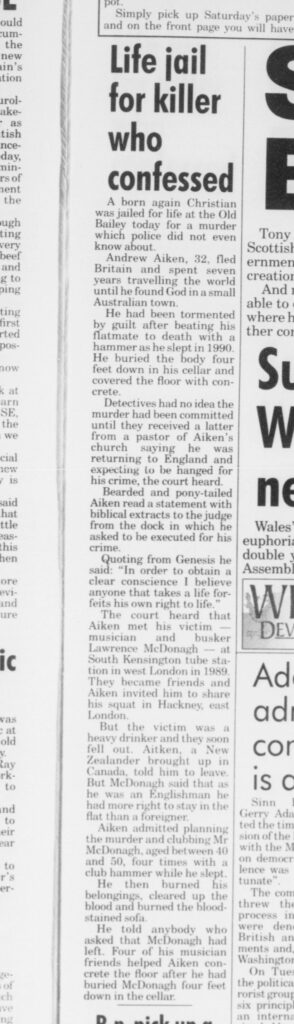
According to later accounts pieced together after Aiken’s eventual confession, an argument between the two men, fuelled by drinks, escalated into violence one night in 1990. Aiken attacked his housemate with a hammer as he slept, killing him.
What happened afterwards is the detail that has stayed with this story: rather than fleeing immediately, Aiken concealed the body in the cellar, burned the dead man’s clothes and sealed the remains beneath a covering of concrete. The house did not become a crime scene in any visible sense, it carried on functioning as a home.
Other squatters reportedly came and went, some even doing work in the cellar itself, entirely unaware of what lay beneath the new concrete floor. For the people living there, life continued as normal in a building that had, in effect, become a sealed grave.
Flight to Sydney
Aiken left Britain not long after the killing, resurfacing on the other side of the world in Sydney’s Newtown, where an entirely different reputation began to take shape. In August 1991 working under the cover of darkness with artist Juilee Pryor, Aiken helped create the enormous ‘I Have a Dream’ mural on King Street using a donated cherry-picker and around a thousand dollars of paint scraped together between them.
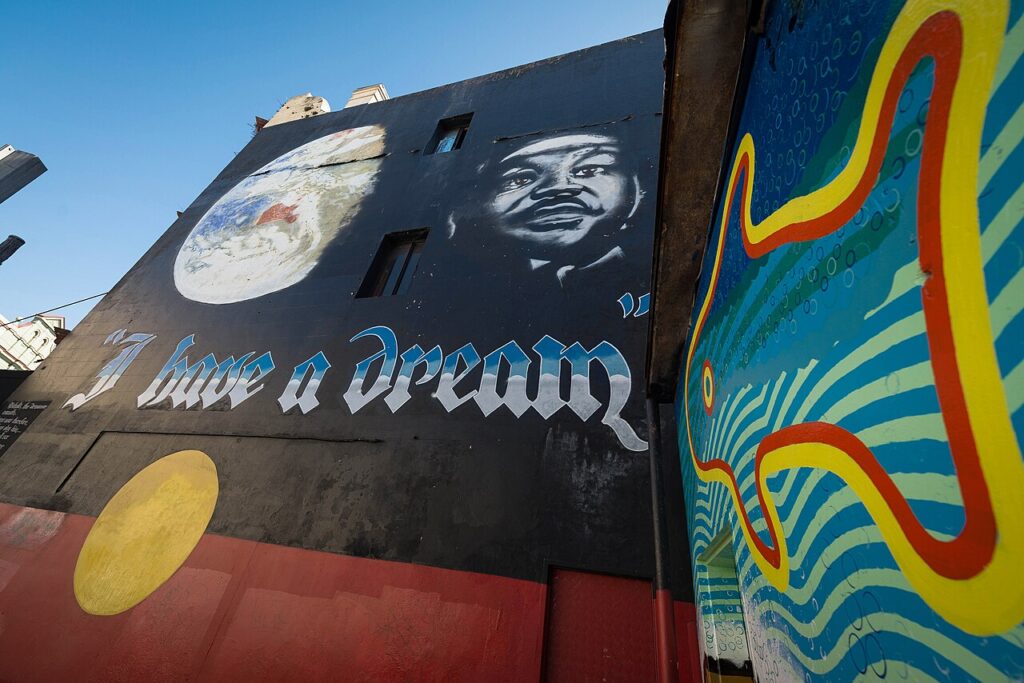
This three-storey tribute to Martin Luther King Jr that the pair described at the time as a “humanist protest against the sterility of postmodern art” is now widely regarded as one of the most photographed pieces of street art in Australia and was formally heritage-listed in December 2014. Aiken went on to become the driving force behind ‘Unmitigated Audacity Productions’, a loose guerrilla mural collective that also included Tony Spanos and Matthew Peet.
Between 1991 and 1995 the group produced a striking body of illegal uncommissioned street art across Newtown and Erskineville, pieces referencing everyone from Miles Davis and John Coltrane to biblical and civil-rights imagery, several of which are still standing or fondly remembered decades later. Locally, he was simply known as a talented and prolific muralist. Nobody in Sydney’s art scene knew what he had left buried in a London cellar.
The Confession
The story might have ended there had Aiken not fallen in with the ‘Twelve Tribes’, a Christian community with a base in Picton, New South Wales. According to accounts of his later life, mounting religious conviction and remorse led him to disclose the killing to the group’s leadership, who urged him to return to Britain and face what he had done.
In 1997, seven years after the murder, Aiken handed himself in to police and led detectives to the London house, where the concealed remains were finally recovered. He was subsequently tried and convicted of murder, serving a lengthy prison sentence in England before his eventual release in the mid-2000s.
By then, the house on Martello Street had quietly lived an entire second life above an undiscovered crime: squatted, worked in, walked through, while the truth waited under the cellar floor.
A Mural With a Hidden Meaning
What makes the case linger in local memory isn’t only the concealment, but the strange juxtaposition of art and violence around it.
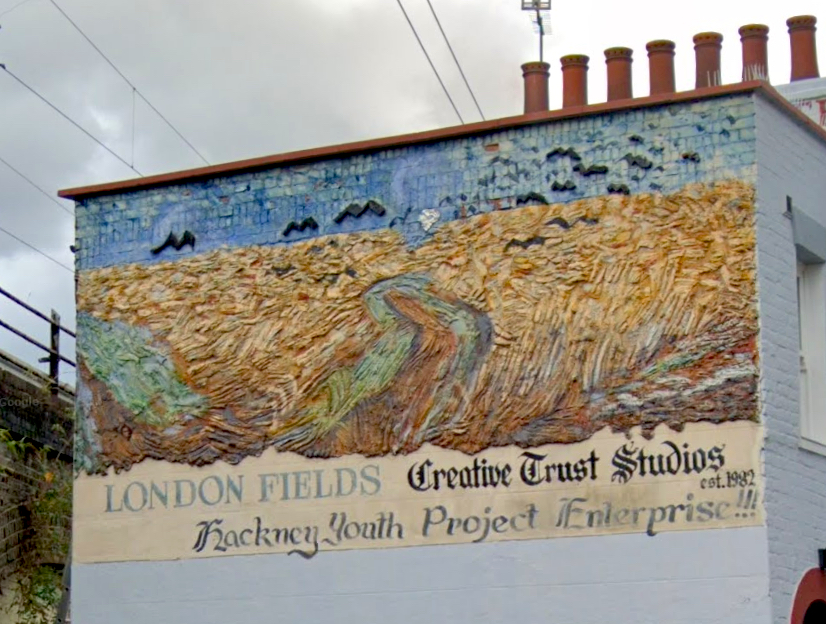
Aiken also used the name Andy Signtist, under which some of his artistic work was known. Reports from the time describe Aiken painting a mural on Martello Street not long after the murder. Another of his pieces appeared beneath the nearby railway bridge and carried the stark message ‘Apathy Breeds Cement’.
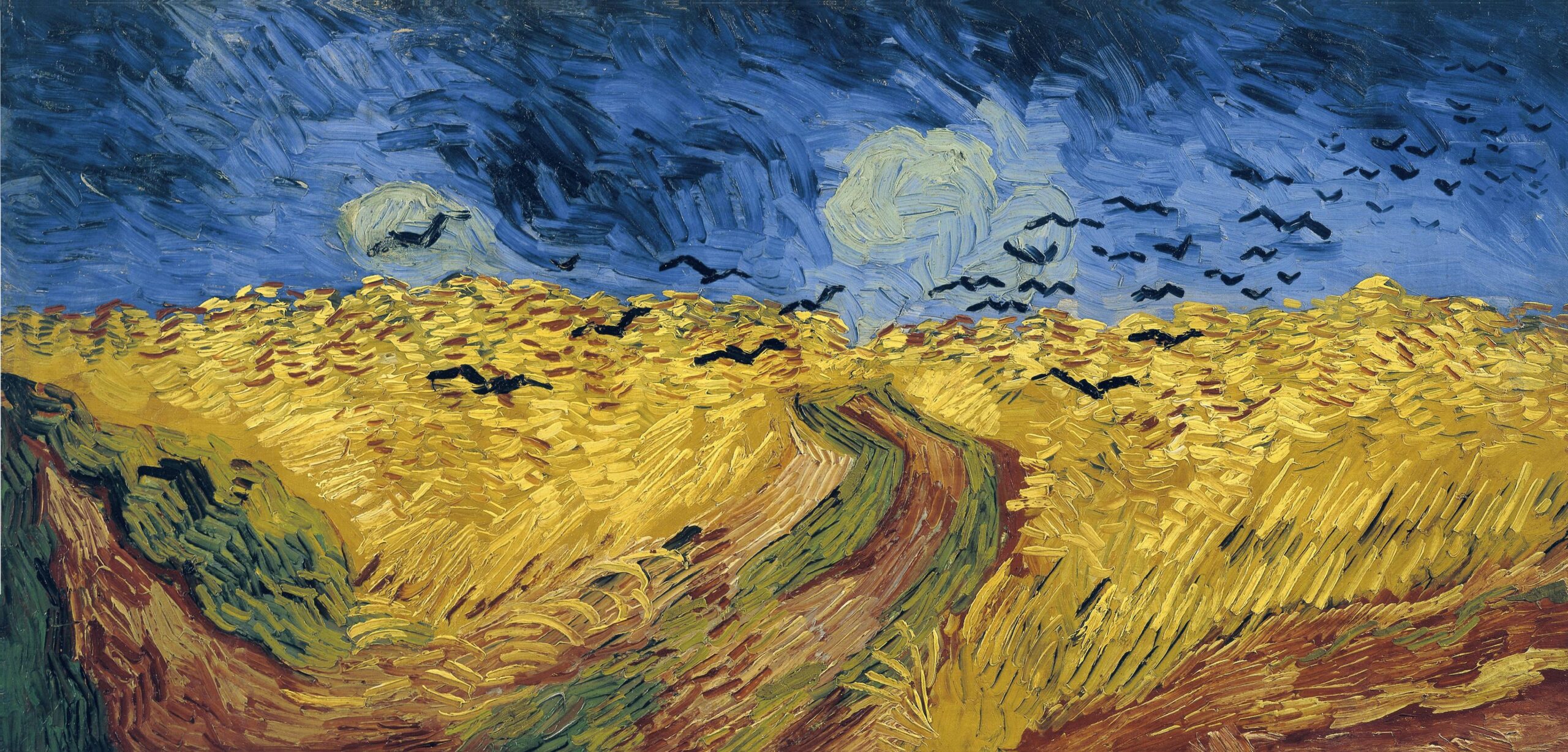
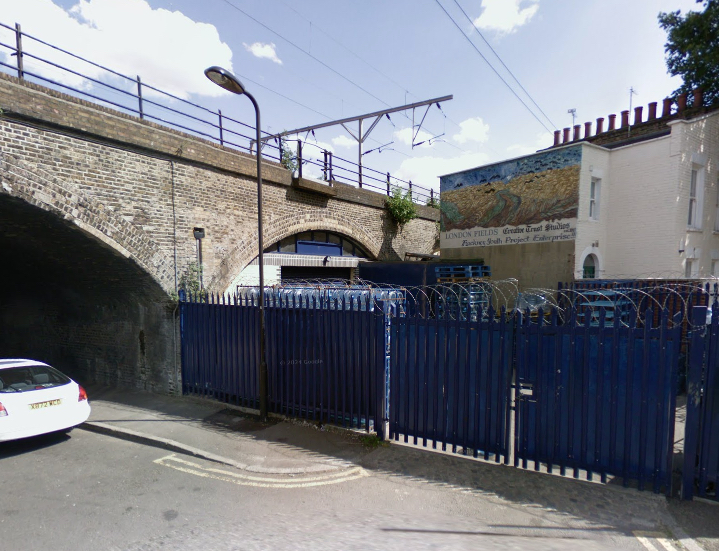
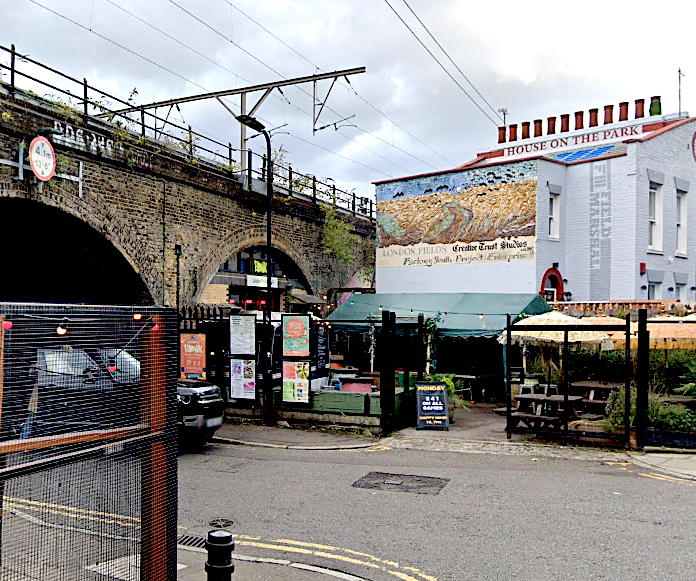
The mural in Martello Street survives to this day: a striking reproduction of Van Gogh’s late work ‘Wheatfield with Crows’, its blue sky and black birds still climbing the brickwork above the lettering for the London Fields Creative Trust Studios and the Hackney Youth Project Enterprise.
Passers-by and fellow London Fields residents are said to have admired the Martello Street mural at the time, unaware of what its creator had done. The same tension runs through the Newtown mural half a world away. Its message of hope and redemption, still visible on King Street today, was created by a man quietly carrying the secret of a killing he had not yet confessed to. It is a detail that has turned ‘I Have a Dream’ into a dark footnote in Sydney street-art folklore, while the house opposite the Pub on the Park remains one of London Fields’ odder pieces of hidden history.
Leave a Reply