
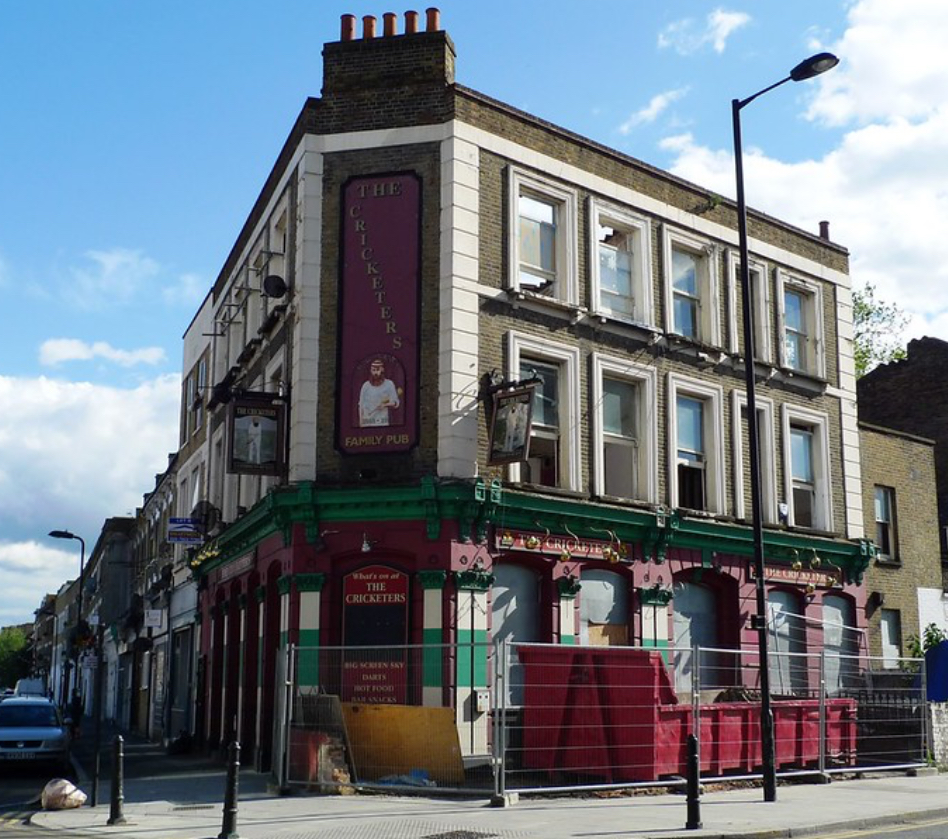
The Cricketers pub was a constant presence in Lower Clapton for over 150 years, witnessing everything from Victorian expansion and post-war rebuilding to gentrification and changing drinking habits. Although its name and character have changed many times, the building has survived closure, controversy and even the threat of demolition, remaining one of Clapton’s most recognisable historic pubs.
A Victorian Pub for a Growing Hackney
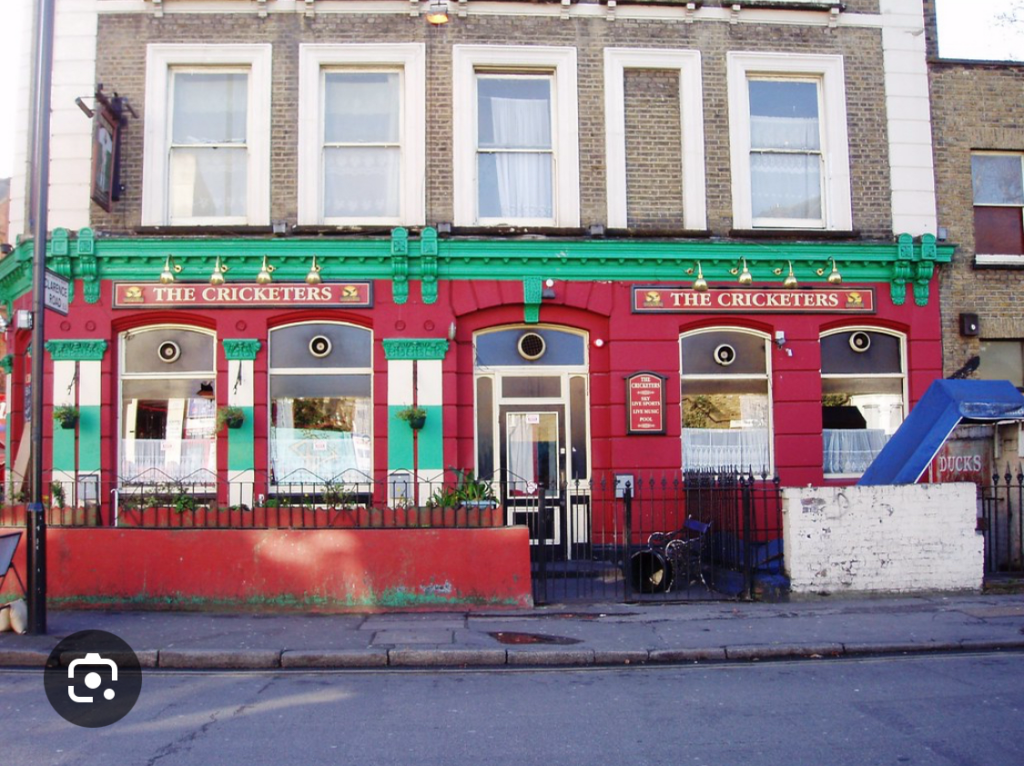
The Cricketers first appears in local trade directories in 1872, when its earliest recorded licensee, R. C. Cook, began serving the growing residential district around Hackney Downs. Clarence Road itself was still a relatively new street, laid out during the rapid Victorian expansion of Lower Clapton as farmland gave way to rows of terraced housing for London’s expanding population.
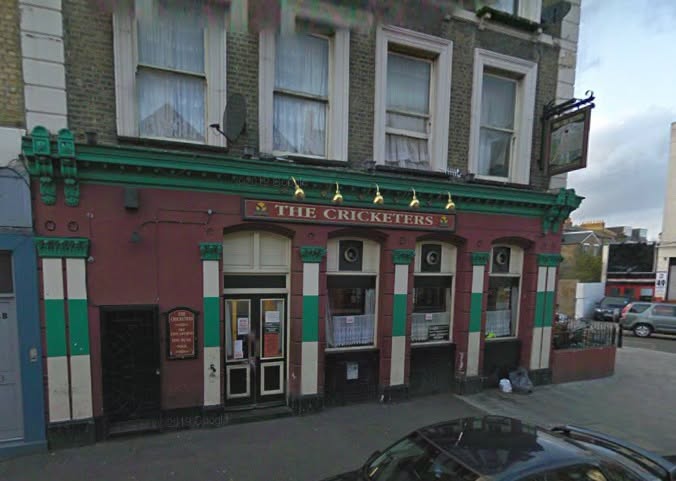
Sometimes advertised as the Cricketers Hotel, the premises was typical of many 19th-century public houses, offering not only food and drink but also modest accommodation for travellers and commercial visitors. Throughout the late 19th and early 20th centuries it was run by a succession of licensees, including William Cooper, John Beech, Ernest Griffiths and John McCallum, establishing itself as one of the neighbourhood’s principal corner pubs and an important centre of everyday community life.
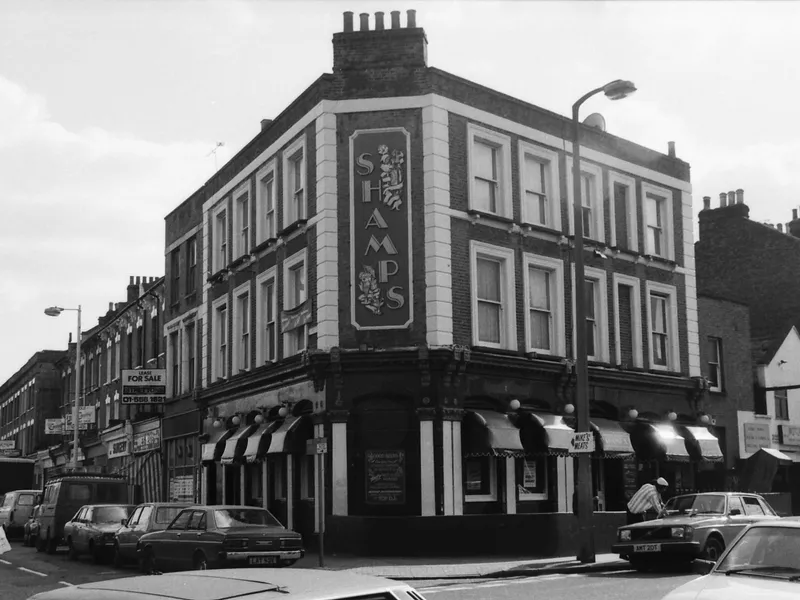
Although it traded as The Cricketers for most of its history, the building underwent several reinventions during the late 20th century. At different times it adopted names including The Penny Farthing and, most notably, Shamp’s, which transformed the traditional pub into a fashionable late-night venue with DJs, dancing and entertainment.
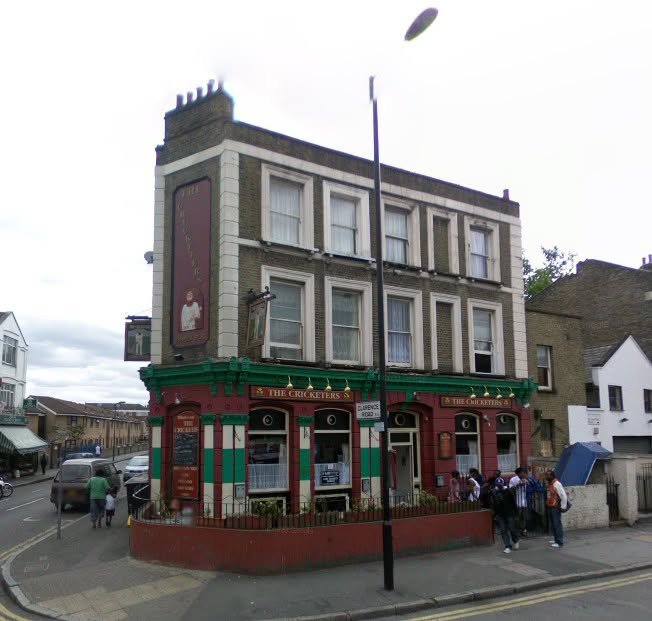
The historic name eventually returned, but the building continued to evolve, with the basement operating under its own identities, including Mingles, Donald’s Ducks and then simply The Cricketers’ downstairs. It became known for its eclectic atmosphere, where reggae-infused birthday parties, weddings, nine nights and wakes could coexist with wild dancehall sessions or even punk rock gigs. The contrast between the traditional pub upstairs and the mixed basement venue below gave The Cricketers a unique character that reflected the cultural diversity of Hackney itself.
The ‘Oh Baby’ Years
For many local people the pub’s defining era began under landlord Hubert Augustus ‘Hughie’ Adams (1936-2009), affectionately known throughout Hackney as ‘Oh Baby.’ Having previously run the nearby Earl of Warwick on Beatty Road and the Coach & Horses on Stoke Newington High Street, Hughie brought many of his loyal customers with him when he took over The Cricketers.
Immaculately dressed every day in tailored suits, polished shoes and colourful pocket squares, he became one of the most recognisable publicans in east London, combining old-fashioned professionalism with genuine warmth and generosity. Under Oh Baby’s stewardship, The Cricketers developed into one of Hackney’s most important Caribbean community pubs.

Every Sunday he served free West Indian food, while DJs including Jessie James, Joe Uprising, Desmond and Captain filled the pub with oldies, ska and rocksteady. The Sunday sessions attracted an older crowd from across east London, many arriving dressed in elegant suits, stylish hats and beautifully tailored outfits that turned the pub into an informal celebration of Caribbean fashion as well as music. It was a place where several generations gathered together, catching up with friends, dancing, playing pool, eating and sharing stories in an atmosphere that many still remember with enormous affection.
The Cricketers also became something of a cultural crossroads. Local memories recall visits by reggae artists including Barrington Levy, Dennis Brown and Gregory Isaacs, while comedian Ping Wing was another familiar face. Resident DJs included Master D, Kinger, CB and Danger C. The pub comfortably mixed different audiences and musical traditions. Alongside its famous old fashioned Sundays there might be a Scottish karaoke evening, romantic lovers’ rock nights or a wild bashment session, reflecting the extraordinary cultural diversity that has long characterised Clapton.
Decline and Closure
After Oh Baby left, many regulars felt that The Cricketers gradually lost the distinctive atmosphere he had spent years building. New management struggled to maintain the strong community spirit that had defined the pub during its most successful years.
At the same time, the surrounding area was experiencing increasing problems linked to crime on nearby Upper and Lower Clapton Road, an area that would later gain national notoriety as part of London’s so-called ‘Murder Mile’. Although The Cricketers had long served local residents peacefully, it increasingly became caught up in the wider challenges affecting the neighbourhood.
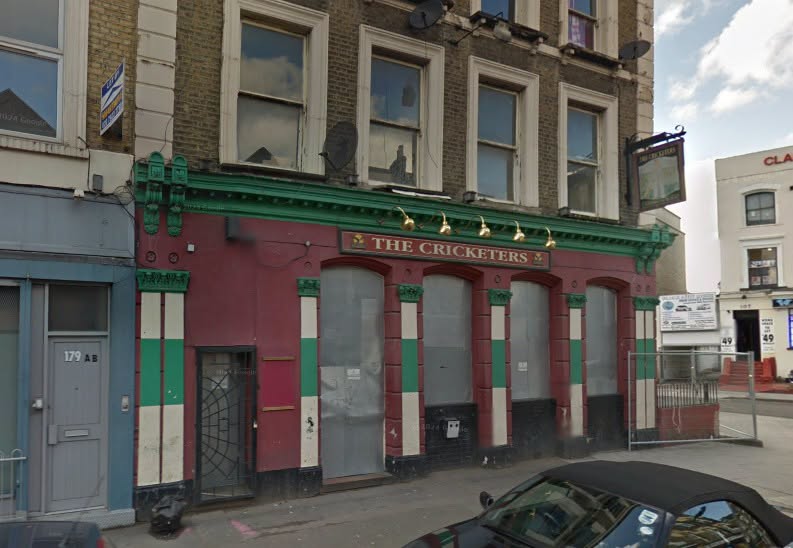
Despite attracting large crowds with DJs and dancing, licensing problems for the pub became increasingly frequent. In 2009 the Cricketers was the subject of a major police operation and subsequently lost its licence, bringing more than 130 years of continuous pub trading to an abrupt end.
Saved from Demolition
Closure was not the end of the story. Soon afterwards developers purchased the site with plans to demolish the Victorian building and replace it with residential flats. The proposal prompted a determined campaign by local residents, heritage supporters and the Campaign for Real Ale (CAMRA), who argued that the pub formed an important part of Clarence Road’s historic streetscape.
The campaign succeeded in preventing demolition, ensuring that one of Lower Clapton’s surviving 19th-century pubs remained standing. At a time when historic London pubs were disappearing at an unprecedented rate, saving The Cricketers represented an important victory for local heritage and demonstrated how strongly the building remained valued by the community despite its closure.
A Series of New Beginnings
The rescued building reopened in 2014 as Verden, reflecting the changing character of Clapton with its emphasis on craft beer, natural wine, artisan cheese and charcuterie. In 2016 it became ‘The Mermaid’, a popular independent craft pub linked to the nearby Mermaid fish and chips shop, that built a loyal following before severe flooding and, later, the Covid-19 pandemic contributed to its closure.
Further reinventions followed under names that include ‘The Black Hen’ and ‘Wing & a Prayer’, each attempting to establish a new identity while preserving the historic building’s role as a local meeting place. Although these ventures were relatively short-lived, they demonstrated the continuing appeal of the site despite the challenges facing the licensed trade.
Moyletts and a Return to Community
In December 2025 the building reopened as ‘Moyletts’, taking its name from owner Rupert Moylett’s Irish family surname. Rather than restoring The Cricketers as it had once been, the venue adopted a contemporary interpretation of the Irish pub, combining Guinness and a house lager with rotating independent beers, pop-up kitchens, live music and cultural events aimed at a new generation of customers.
Although Moyletts has established itself as part of modern Clapton’s hospitality scene, the atmosphere is markedly different from the pub remembered by earlier generations. The basement that once echoed to reggae sound systems, dancehall sessions, punk gigs and lively community celebrations now hosts curated food events and a pool table. Like much of Hackney, the building has adapted to changing tastes and demographics, illustrating how London’s pubs continually evolve as the neighbourhoods around them change.
More than 150 years after R. C. Cook first opened The Cricketers, the building continues to fulfil the purpose for which it was built. From Victorian beerhouse to Caribbean social hub, from troubled late-night venue to threatened demolition and eventual rebirth, its story mirrors the wider history of Hackney itself. For many long-time residents, however, it will always be remembered as the pub where ‘Oh Baby’ welcomed everyone through the door with music, food, style and an unmistakable sense of community.
Leave a Reply