
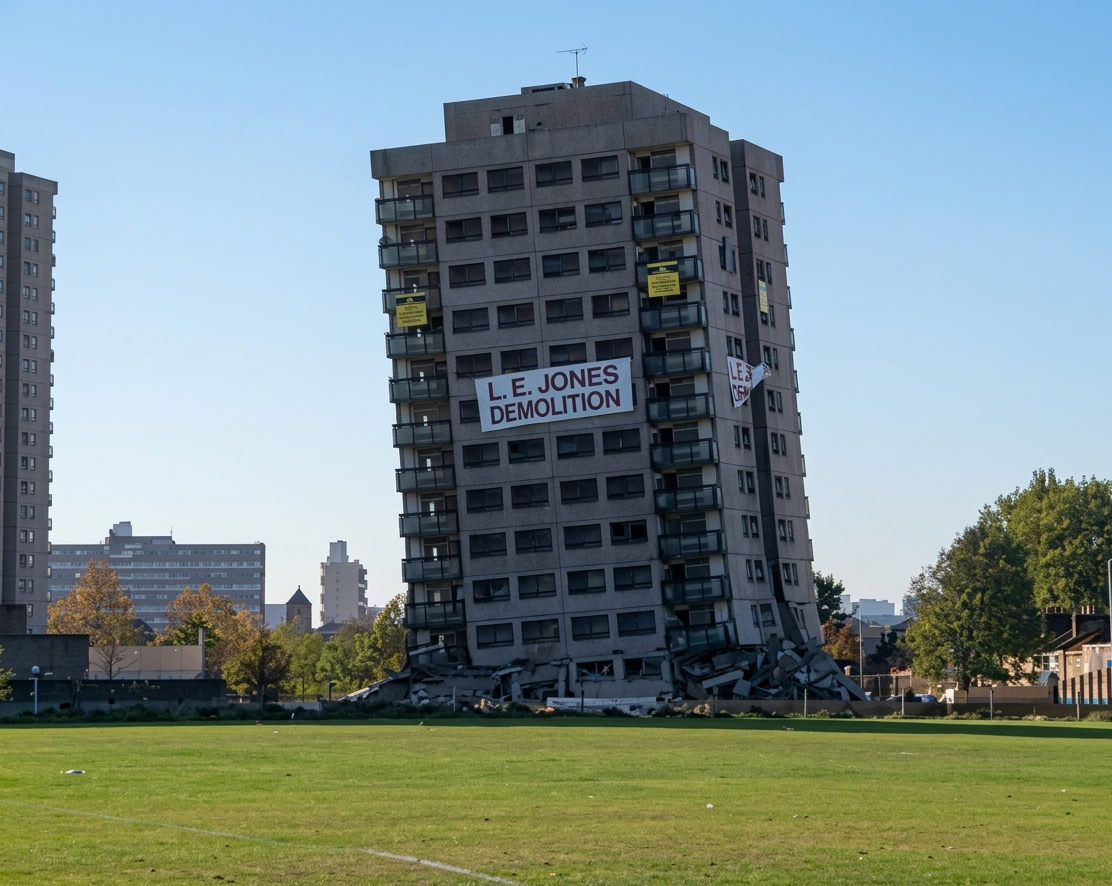
With the decline of certain industries – particularly the chemical and dye works, rubber and plastics manufacturing, food processing and the network of small-scale workshops that once defined the area – Hackney Wick experienced a significant loss of population.
Firms such as E. W. Cook & Company (a 19th-century chemical manufacturer) had historically capitalised on the proximity of the River Lea and an extensive rail infrastructure, which facilitated both production and distribution.
However, by the mid-20th century processes of deindustrialisation, combined with the relocation of manufacturing to outer regions and abroad, led to the rapid contraction of these industries and the erosion of the local economic base.
This industrial decline was accompanied by a profound transformation of the built environment. Much of the earlier street pattern disappeared as part of post-war redevelopment initiatives.
Trowbridge Estate
In the 1960s the Greater London Council undertook the construction of the Trowbridge Estate, which retained only the north-south alignment of Osborne Road and Prince Edward Road from the historic layout.
First opened in 1965 and completed in 1969, the estate comprised 117 bungalow homes, but was most notable for its seven 21-storey tower blocks, distinguished by mosaic facings and glass balconies – emblematic of contemporary approaches to high-density social housing.
The Trowbridge Estate quickly fell into disrepair. Plans to redevelop it began in the 1980s, but progress was slow. By 1987 only three tower blocks had been demolished and the original plans were scaled back. By the late 1990s all seven towers had gone, replaced by low-rise housing.
Clapton Park Estate
The Clapton Park Estate in Hackney, London, was originally known for its five iconic 20-storey tower blocks built in the late 1960s. While several of these blocks were demolished in the 1990s as part of regeneration efforts, the estate area now features a mix of renovated high-rises and newer infill developments.
The estate originally consisted of five identical 20-storey towers located around Mandeville Street and Daubeney Road.
• Norbury Court: Demolished via explosion in October 1993.
• Ambergate Court: Demolished via explosion in October 1993.
• Bakewell Court: Demolished in March 1995.
• Repton Court: Demolished in March 1995.
• Sudbury Court: The only original tower still standing. It was sold to a private developer, renovated and renamed Landmark Heights.
Division and Decline
Parallel developments reflected broader shifts in welfare provision and urban planning. In 1960, the London County Council opened Eastway Park as an old people’s home, situated to the south-west of Hackney’s former Public Baths (now the Hackney Wick Community Centre).
The physical division of Hackney Wick intensified from the 1970s. Infrastructure projects carved up the landscape, including the partially sunken Cowdry Road and the elevated East Cross motorway.
Construction of this route led to the demolition of Hackney Wick station, which had already been closed since 1943. A new station later opened on Chapman Road in 1980.
Art, Memory and Loss
The demolition of Hackney Wick’s tower blocks was highly controversial within the local community and widely documented. Photographers including Alan Denney and Chris Dorley-Brown captured the final days of the estates, preserving a visual record of a disappearing landscape.
Artist Rachel Whiteread responded to these changes with her series ‘Demolished’, now held in the Tate collection. Created between 1993 and 1995, the works document the destruction of Hackney’s Clapton Park Estate. Whiteread described the series as capturing “something that is going to be completely forgotten… the detritus of our culture.”
Created during the era of Margaret Thatcher, the work reflects concerns about the social and economic changes of the time, particularly their impact on housing and homelessness in London.
Latest Blog Posts
Stay informed and inspired with our latest blog posts. Discover insights, tips, and trends across various topics.
-
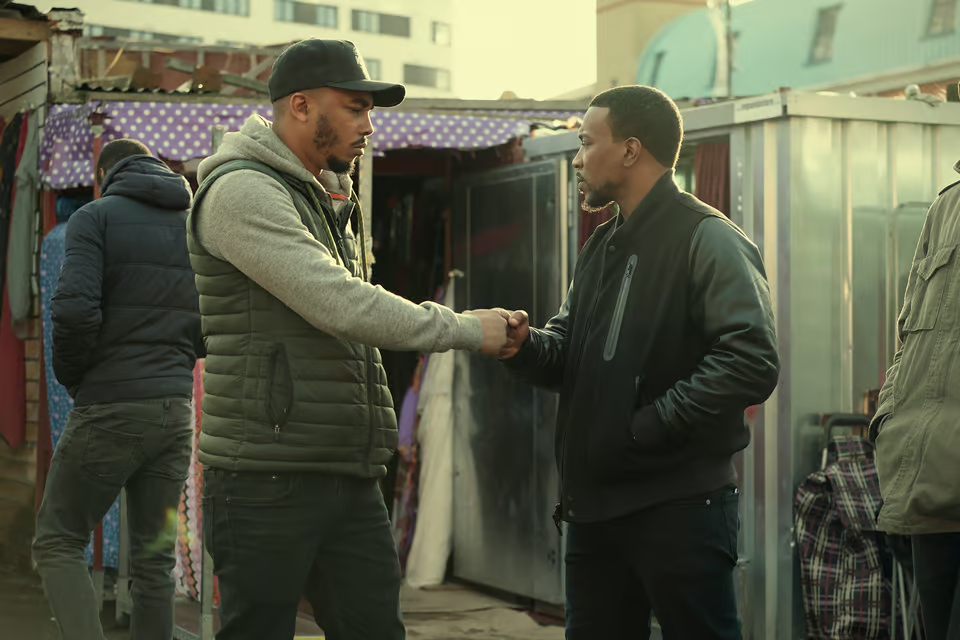
Top Boy: The Hackney Roots of Summerhouse
Top Boy is a Hackney story at heart, even though its fictional Summerhouse Estate has…
-
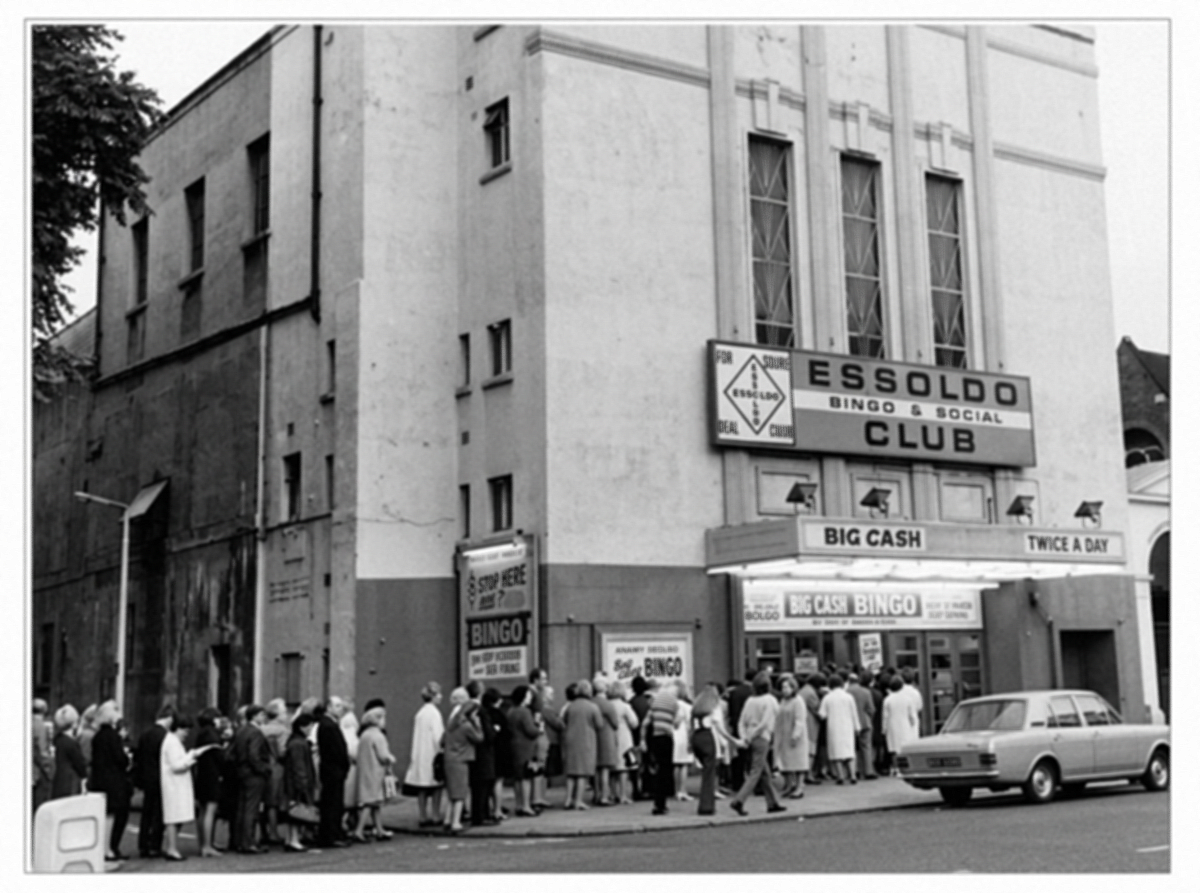
184 Mare Street, Hackney E8: The Remarkable Rise and Fall of a Local Landmark
Discover the lost history of 184 Mare Street, Hackney E8: from its origins as a…
-

Murder on Martello Street, Hackney E8: The Dark History of a London Fields Squat
Discover the eerie history of a Martello Street house in London Fields where a murdered…

Leave a Reply