
A Riverside Pub Steeped in History
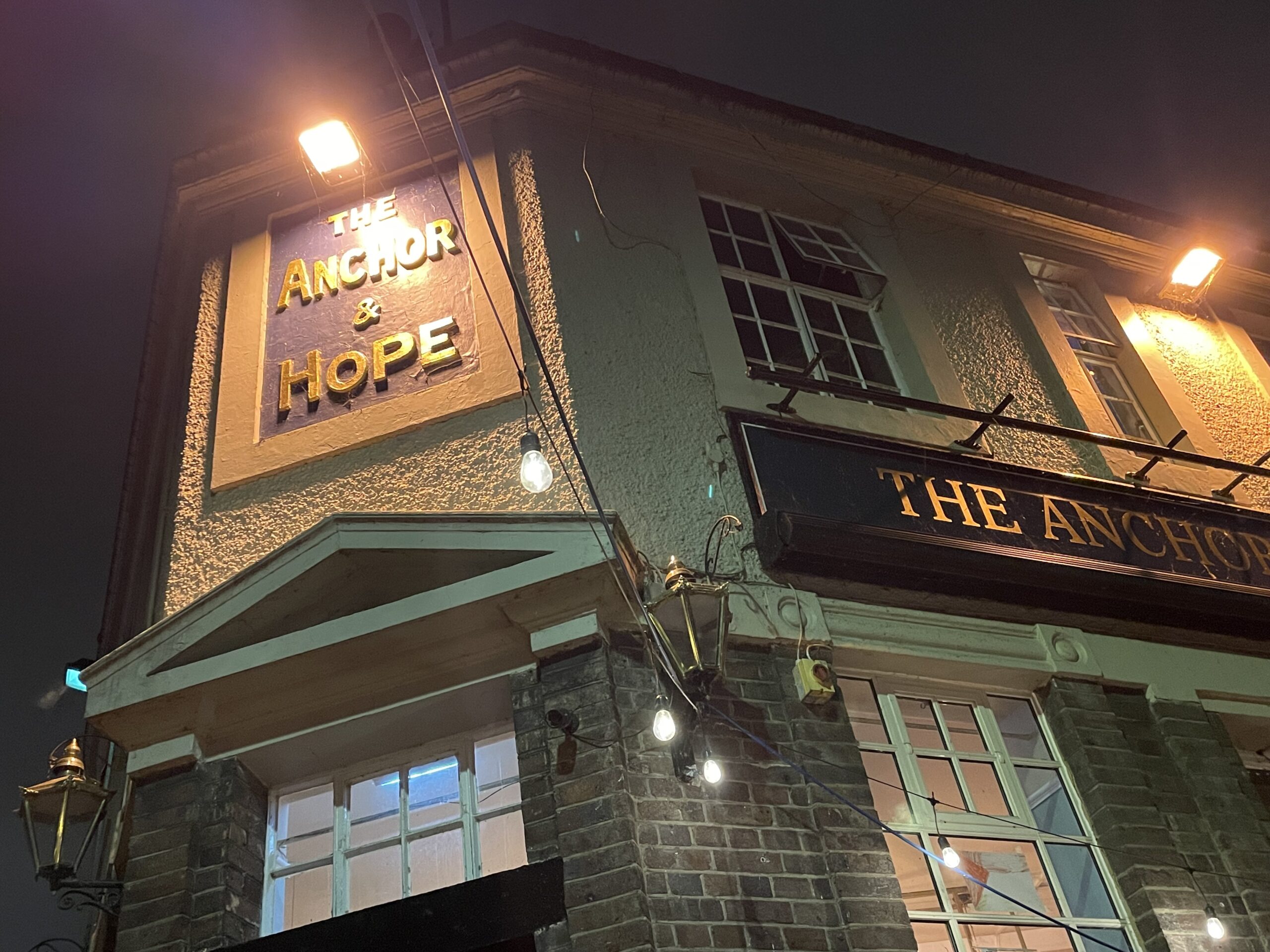
Tucked away at the end of a quiet lane in Clapton, on the banks of the River Lea, the The Anchor & Hope is one of East London’s most characterful and historic pubs. Small in size but rich in story, this waterside gem offers a glimpse into Hackney’s past – long before cafés, conversions and canal-side flats reshaped the area.
Origins on the River Lea
The story of the Anchor & Hope begins in the mid-19th century, when this stretch of the Lea Valley was a working landscape of industry and trade. The pub likely dates back to around 1850, evolving from an earlier beer and chandler’s shop recorded on the site in 1851.
At the time, the surrounding area was populated by watermen, bargemen, dyers and labourers who relied on the river for their livelihoods. High Hill Ferry, just outside the pub, was an important crossing point, and the Anchor & Hope would have served as a vital meeting place for workers and travellers alike.
A ‘Village Without Law’
By the late 19th century, the area around the pub had developed a reputation as something of a rough-and-ready settlement. Described in historical records as a “veritable Alsatia” – a place beyond the reach of law – it attracted both local workers and curious visitors seeking a rural escape from the city.
Despite its reputation, the pub thrived as a social hub, drawing in summer pleasure-seekers who came to enjoy the unusual mix of marshland, industry and riverside tranquillity.
A Pub Full of Characters
Throughout the 20th century, the Anchor & Hope became known not just for its setting, but for its people. From 1953 to 2003, it was run by legendary landlord Leslie Heath (1925-2003), whose long tenure helped cement the pub’s identity as a cornerstone of the local community.
Les was the Anchor & Hope’s publican from 1953 to 2003. In 1973 he took over the licence from his father-in-law, William Wilders. In 1997 he was given an MBE for his services to the community.
In the 1970s the Anchor & Hope was a favourite pub of CAMRA as it was one of the few pubs in London that sold real ale from a hand pump. It also became notorious for its ‘colourful’ clientele who were described by one local as ‘people who lived on the eccentric side of life’.
Artists, locals, boat dwellers and free spirits regularly drank at the pub, which helped building its larger-than-life reputation despite its tiny footprint. The Anchor & Hope also gained recognition among real ale enthusiasts in the 1970s, when it was one of the few London pubs still serving traditional cask beer.
Why was the Anchor & Hope locally known as ‘the Tolly’?
The Anchor & Hope picked up the nickname ‘The Tolly’ because in the past it was linked to the Tollemache brewery (later Tolly Cobbold). When a pub was tied to a particular brewery, it was really common for locals to nickname it after the beer they drank there, quicker and more familiar than the official name.
For many drinkers in the mid-to-late 20th century, “a pint of Tolly” was a standard order in pubs tied to the brewery such as the Anchor & Hope. So, over time, regulars simply started referring to the pub as ‘The Tolly’ and the name stuck. It’s a classic bit of pub culture – much like other London locals shortening or renaming pubs based on landlords, breweries or inside jokes – and it tells you a lot about how strong community identity was (and still is) around places like the Anchor and Hope.
From Brewery Ties to Modern Day
Historically linked to the Tollemache brewery (later Tolly Cobbold), the Anchor & Hope eventually came under the ownership of Fuller’s in the 1970s – a relationship that continues today.
Structurally, the pub has changed very little over the decades. Originally it was divided into at least two sections with locals recalling the small right-hand room being used to purchase items such as sweets from an off-sales counter. It was converted into a single bar space in 1962, preserving much of its traditional interior, including wood panelling and a compact, cosy layout.
Tollemache Breweries Ltd. was a prominent brewing company founded in Ipswich, Suffolk, in 1888. The brewery was established by the three sons of the 1st Baron Tollemache – Douglas, Stanhope and Mortimer – who purchased the Cullingham Steam Brewery on Upper Brook Street.
Over several decades, the company grew by acquiring other regional brewers, including Collier Brothers of Walthamstow in 1920 (renaming the firm Tollemache’s Breweries Ltd.) and the Star Brewery in Cambridge in 1934.
Tolly Cobbold brewery was formed in the 1957 through a partnership between two powerful local families: the Tollemache family and the Cobbold family (who had been brewing since the 18th century, making it one of the older brewing lineages in England).
Their combined name – Tollemache & Cobbold – was a bit of a mouthful, so it naturally got shortened to ‘Tolly Cobbold’ at the time of the merger of the two companies.
Based in Ipswich, the brewery became a major regional player, supplying beer across East Anglia and into London. Like many breweries at the time, it owned a large number of tied pubs, meaning those pubs were required to sell its beer, which is how its name became so familiar to drinkers.
Tolly Cobbold was best known for traditional ales, especially Best Bitter, Mild Ale and later, the well-known Tolly Original.
Like many regional breweries, Tolly Cobbold struggled with industry consolidation in the late 20th century. Brewing in Ipswich eventually ceased in 2002 after the company was taken over by larger brewing companies.
Fuller’s brewery – officially known as Fuller, Smith & Turner – was established in 1845. Based at the historic Griffin Brewery in Chiswick, London, it was a family-run business for over 170 years before selling its brewing division to the Japanese company Asahi in 2019.
A Hidden Gem in Hackney
Today, the Anchor & Hope remains one of the smallest and most atmospheric pubs in London. Perched right on the river’s edge, it attracts a mix of locals, walkers, cyclists and boaters who come for its unique charm and peaceful setting.
In a borough that has seen dramatic change over the past few decades, the pub stands as a rare survivor – offering a direct link to Hackney’s industrial past and its enduring sense of community.
More Than Just a Pub
What makes the Anchor & Hope special isn’t just its age or architecture – it’s the feeling that time moves a little differently there. Step inside, and you’re part of a story that stretches back over 150 years, shaped by the river, the people and the ever-changing landscape of East London.
Latest Blog Posts
Stay informed and inspired with our latest blog posts. Discover insights, tips, and trends across various topics.
-
The Changing Face of Hackney Wick
With the decline of certain industries – particularly the chemical and dye works, rubber and…
-
Hackney History: The Anchor & Hope, Clapton
A Riverside Pub Steeped in History Tucked away at the end of a quiet lane…

Leave a Reply